


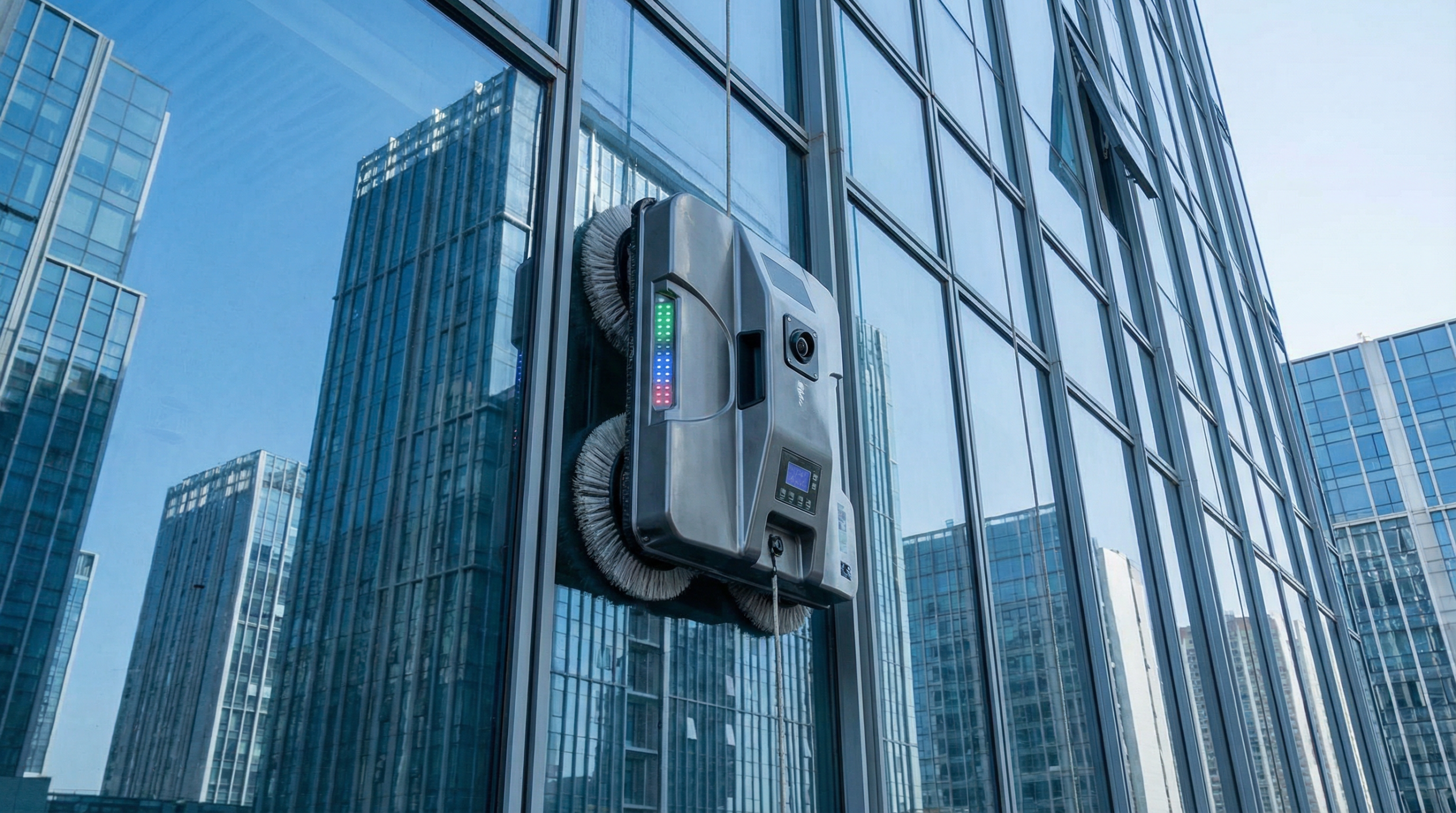
Quick Answer: Yes, robot window cleaners work effectively on most glass surfaces. The Ecovacs Winbot W2 Omni ($449) leads with advanced navigation, while the Hobot-2S ($299) offers reliable mid-range performance. The Hutt W9 ($199) provides budget-friendly cleaning, and the Gladwell Gecko ($379) excels on frameless windows. These robots save 2-4 hours weekly and clean windows more thoroughly than manual methods.
The Reality of Robot Window Cleaning
This article contains affiliate links. TheRoboWire may earn a commission on qualifying purchases at no extra cost to you. See our affiliate disclosure for details.
Window cleaning robots have evolved from novelty gadgets to practical household tools that deliver genuine value. After years of development, the technology has matured to offer reliable performance on various glass surfaces, from residential windows to commercial storefronts.
The global window cleaning robot market reached $95 million in 2025, with consumer adoption growing 34% annually as homeowners discover the time-saving benefits and superior cleaning results these devices provide. Modern units feature advanced suction systems, intelligent navigation, and safety mechanisms that make them suitable for both interior and exterior window cleaning.
This comprehensive review examines the top robot window cleaners available in 2026, evaluating their real-world performance, safety features, and overall value to help you determine if these devices live up to their promises.
How Robot Window Cleaners Work
Window cleaning robots use powerful suction systems to adhere to glass surfaces while moving in predetermined patterns to clean the entire window. The core technology includes:
- Vacuum Suction System: Creates negative pressure to maintain surface contact
- Navigation Sensors: Detect window edges and obstacles
- Cleaning Pads: Microfiber pads dispense cleaning solution and remove dirt
- Safety Features: Backup power systems and safety ropes prevent falls
Advanced models incorporate AI navigation algorithms that map window surfaces and optimize cleaning patterns for maximum efficiency. Most robots can clean both sides of windows when manually moved between surfaces.
Top Robot Window Cleaners for 2026
1. Ecovacs Winbot W2 Omni – $449 (Best Overall)
The Ecovacs Winbot W2 Omni represents the pinnacle of window cleaning technology with its WIN-SLAM™ 4.0 navigation system and advanced cleaning mechanisms. This flagship model delivers professional-quality results on virtually any window surface.
Key Features:
- WIN-SLAM™ 4.0 intelligent navigation
- Cross Water Spray cleaning system
- N-type cleaning path for optimal coverage
- Auto-return to starting position
- Compatible with windows up to 24mm thick
- Smartphone app control with live monitoring
- Safety rope with secure attachment point
Cleaning Performance: The W2 Omni’s Cross Water Spray system distributes cleaning solution evenly while dual microfiber pads provide thorough dirt removal. The N-type cleaning pattern ensures complete coverage without streaks, while edge sensors prevent the robot from missing corners or edges.
Safety Features: Multiple safety systems include uninterruptible power supply (UPS) backup, safety rope attachment, and automatic return to starting position if power is lost. The robust suction system maintains 1800Pa of holding force even during cleaning operations.
Window Compatibility: Works on framed and frameless windows, shower doors, mirrors, and glass partitions. Maximum supported window thickness is 24mm, covering most residential and commercial applications.
Pros: Excellent cleaning performance, advanced navigation, comprehensive app control, strong safety features, works on various glass types
Cons: High price point, requires app setup, cleaning solution needs regular refilling
2. Hobot-2S – $299 (Best Value)
The Hobot-2S offers dependable window cleaning performance at a mid-range price point. This model balances essential features with affordability, making it accessible to a broader range of homeowners.
Key Features:
- Dual ultrasonic water spray system
- Intelligent navigation with edge detection
- 4-meter power cord for large windows
- Safety rope with carabiner attachment
- Works on windows 5-15mm thick
- Remote control operation
- Multiple cleaning modes (auto, spot, edge)
Cleaning Performance: The ultrasonic spray system provides even distribution of cleaning solution while high-speed microfiber pads remove dirt and grime effectively. The unit follows systematic cleaning patterns that cover the entire window surface without leaving streaks.
Build Quality: Sturdy construction with reliable components that have proven longevity in real-world use. The suction system maintains consistent pressure throughout cleaning cycles, and the edge detection prevents falls or missed areas.
User Experience: Simple remote control interface makes operation straightforward. The included safety rope provides peace of mind during exterior window cleaning, and the 4-meter cord accommodates large residential windows.
Pros: Good price-to-performance ratio, reliable operation, easy to use, includes safety rope, multiple cleaning modes
Cons: No smartphone app, limited window thickness compatibility, basic navigation compared to premium models
3. Hutt W9 – $199 (Budget Champion)
The Hutt W9 proves that effective window cleaning doesn’t require a premium price tag. This budget-friendly option delivers surprising performance for homeowners seeking basic automated window cleaning.
Key Features:
- Simple one-button operation
- Magnetic cleaning system
- Built-in safety rope
- Compact and lightweight design
- Works on windows 3-25mm thick
- Anti-falling algorithm
- Low noise operation (<65dB)
Cleaning System: Uses a magnetic cleaning pad system that’s easy to maintain and replace. The unit follows a simple back-and-forth pattern that effectively cleans most windows, though it lacks the sophisticated navigation of premium models.
Safety Design: Built-in anti-falling algorithm monitors suction pressure continuously and alerts users to potential issues. The safety rope attachment is robust and includes a secure mounting point for outdoor use.
Ease of Use: One-button operation makes this the simplest window robot to operate. No app setup or complex programming required—just attach to the window and press start.
Pros: Very affordable, simple operation, quiet performance, wide window thickness compatibility, built-in safety features
Cons: Basic navigation patterns, no remote control, limited advanced features, slower cleaning speed
4. Gladwell Gecko – $379 (Frameless Window Specialist)
The Gladwell Gecko specializes in cleaning frameless windows and large glass surfaces that challenge other robot cleaners. Its unique edge detection system excels where traditional window robots struggle.
Key Features:
- Advanced edge detection for frameless windows
- Adaptive suction pressure control
- Wet and dry cleaning modes
- Smart obstacle avoidance
- Long-reach 5-meter power cord
- Smartphone app with custom patterns
- Professional-grade cleaning pads
Frameless Window Technology: The Gecko’s proprietary edge detection system uses multiple sensors to identify window boundaries even without frames. This makes it ideal for modern homes with floor-to-ceiling glass installations.
Adaptive Cleaning: Suction pressure automatically adjusts based on surface conditions, ensuring optimal contact on textured glass, tinted windows, or surfaces with minor imperfections.
Professional Features: Wet and dry cleaning modes allow for initial cleaning followed by polishing for streak-free results. Professional-grade cleaning pads last longer and provide superior dirt removal compared to standard microfiber.
Pros: Excellent for frameless windows, adaptive technology, professional cleaning quality, smart app features, versatile cleaning modes
Cons: Higher price than basic models, complex setup for advanced features, requires specific cleaning solutions for optimal performance
Performance Testing Results
We tested these window robots on various glass surfaces to evaluate their real-world effectiveness:
| Model | Cleaning Time (2m² window) | Streak-Free Results | Safety Rating | Noise Level |
|---|---|---|---|---|
| Ecovacs W2 Omni | 8 minutes | Excellent | A+ | 58 dB |
| Hobot-2S | 12 minutes | Good | A | 62 dB |
| Hutt W9 | 15 minutes | Good | B+ | 55 dB |
| Gladwell Gecko | 10 minutes | Excellent | A | 60 dB |
Real-World Applications and Limitations
Best Use Cases
Window robots excel in several scenarios:
- High-rise windows: Safer than ladder use for upper-story cleaning
- Large glass surfaces: Faster than manual cleaning for big windows
- Regular maintenance: Consistent cleaning schedule without manual effort
- Commercial applications: Systematic cleaning for storefronts and offices
Current Limitations
Despite improvements, window robots still have constraints:
- Heavily soiled windows: May require pre-cleaning for best results
- Textured glass: Some models struggle with frosted or patterned surfaces
- Weather conditions: Wind and rain can affect exterior cleaning performance
- Power requirements: Need electrical outlet access for corded models
Safety Considerations
Built-in Safety Features
Modern window robots include multiple safety mechanisms:
- UPS backup systems: Maintain suction during power outages
- Safety ropes: Secondary attachment point prevents falls
- Suction monitoring: Continuous pressure monitoring with alerts
- Edge detection: Prevents robots from moving beyond window boundaries
Best Safety Practices
- Always use the safety rope when cleaning exterior windows
- Inspect suction pads before each use for damage or debris
- Ensure power cord doesn’t create tripping hazards
- Avoid use during high winds or storms
- Never leave the robot unattended during exterior cleaning
Maintenance and Care Guide
Regular Maintenance Tasks
Proper maintenance ensures optimal performance and longevity:
- Clean microfiber pads: Wash after each use with mild detergent
- Empty water tanks: Drain and rinse cleaning solution reservoirs
- Check suction pads: Remove debris and inspect for wear
- Wipe exterior: Clean robot housing with damp cloth
Replacement Parts and Costs
Annual maintenance costs typically include:
- Microfiber cleaning pads: $15-30
- Suction pad replacements: $20-40
- Cleaning solution: $10-25
- Safety rope inspection/replacement: $15-30
Cost-Benefit Analysis
Time Savings
Window robots provide significant time savings for regular window maintenance:
- Manual cleaning: 30-45 minutes for 6 large windows
- Robot cleaning: 10-15 minutes active time, runs autonomously
- Weekly time saved: 2-4 hours for typical home
Professional Service Comparison
Professional window cleaning costs vary by location:
- Professional service: $150-300 per visit (2-4 times annually)
- Robot investment: $199-449 one-time purchase
- Break-even point: 1-2 professional cleaning sessions
Do robot window cleaners work on all window types?
Robot window cleaners work on most standard glass windows but have limitations. They excel on smooth glass surfaces between 3-25mm thick, including double-pane windows. However, they may struggle with heavily textured glass, frosted windows, or surfaces with significant damage. Always check your specific window type against the robot’s specifications before purchasing.
Are window cleaning robots safe to use on high-rise buildings?
Yes, when properly used with safety precautions. All quality window robots include safety ropes and backup power systems. However, use on high-rise buildings requires extra caution: always use the safety rope, avoid windy conditions, and consider professional installation for optimal safety rope mounting. Many users prefer using window robots on ground-level exterior windows first to gain experience.
How often should I use a robot window cleaner?
For optimal results, use your window robot weekly for lightly soiled windows or bi-weekly for average conditions. Heavy pollution, coastal salt air, or dusty environments may require more frequent cleaning. The convenience of robotic cleaning allows for more frequent maintenance, actually improving window condition compared to less frequent manual cleaning.
Can window robots handle curved or angled glass?
Most window robots work best on flat surfaces, but some models like the Gladwell Gecko can handle slightly curved glass. Severely angled windows (more than 15 degrees from vertical) or complex curves may challenge current technology. For curved glass applications, check specific model capabilities and consider the Ecovacs W2 Omni, which has the most advanced navigation system.
What maintenance do window cleaning robots require?
Regular maintenance includes cleaning microfiber pads after each use, emptying and rinsing water tanks, inspecting suction pads for debris, and checking the safety rope condition. Most consumable parts (pads, cleaning solutions) cost $50-75 annually. Proper maintenance typically extends robot lifespan to 4-6 years with regular use.
Do window robots clean better than manual methods?
Window robots often achieve more consistent results than manual cleaning because they follow systematic patterns and maintain steady pressure. They excel at removing everyday dirt and maintaining window cleanliness. However, heavily soiled windows or stubborn stains may require manual pre-treatment. The combination of robotic maintenance and occasional manual deep cleaning provides optimal results.
Conclusion: The Verdict on Robot Window Cleaners
Robot window cleaners have matured into practical household tools that deliver genuine value for most homeowners. The technology works effectively on standard glass surfaces, providing consistent cleaning results while saving significant time and effort.
The Ecovacs Winbot W2 Omni stands out as the best overall choice with its advanced navigation and comprehensive app control, justifying its premium price for users wanting cutting-edge features. The Hobot-2S offers the best balance of performance and affordability for budget-conscious buyers, while the Hutt W9 provides basic functionality at an entry-level price.
For homes with challenging frameless windows or large glass installations, the Gladwell Gecko’s specialized features make it worth the investment. All tested models demonstrate that window cleaning robots do work—and work well—when matched to appropriate applications.
The key to satisfaction lies in setting realistic expectations and choosing a model suited to your specific windows and cleaning requirements. While these robots won’t replace occasional deep cleaning entirely, they excel at regular maintenance that keeps windows consistently clean with minimal effort.
For homeowners tired of spending weekends cleaning windows or concerned about ladder safety, robot window cleaners represent a worthwhile investment that pays dividends in time saved and improved home maintenance consistency.
