


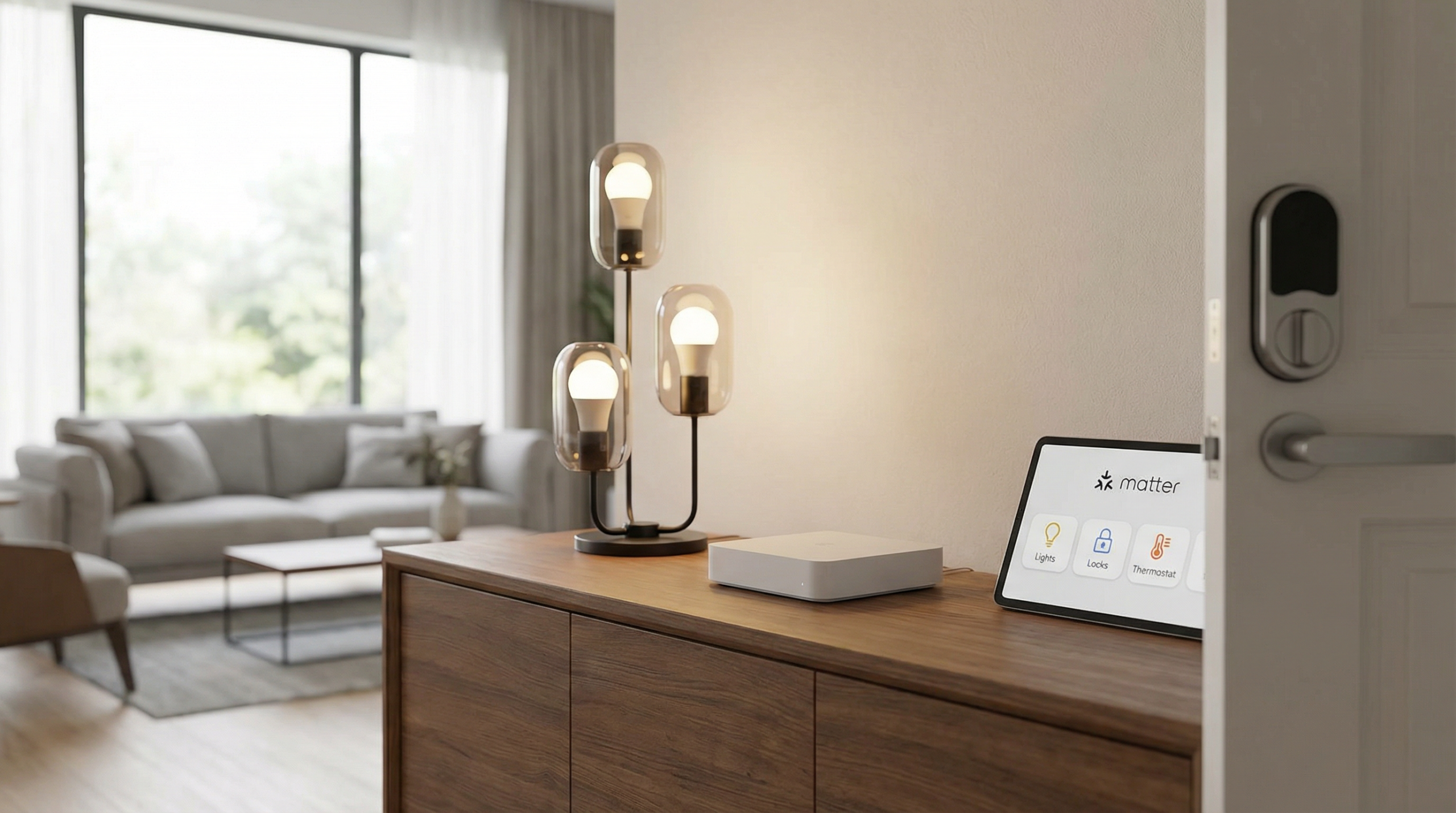
Quick Answer
Matter is the universal smart home standard that enables devices from different brands to work together seamlessly. In 2026, it supports lights, switches, sensors, locks, and more through Thread/Wi-Fi networks. Major benefits: no vendor lock-in, easier setup, better privacy, and cross-platform compatibility with Alexa®, Google® Home, and Apple® HomeKit.
Matter Smart Home Standard: The Universal Language for Connected Devices
This article contains affiliate links. TheRoboWire may earn a commission on qualifying purchases at no extra cost to you. See our affiliate disclosure for details.
After years of smart home fragmentation where devices from different manufacturers couldn’t communicate effectively, Matter has emerged as the solution that promises to unify the connected home ecosystem. Developed by the Connectivity Standards Alliance (formerly Zigbee Alliance), Matter represents the most significant standardization effort in smart home history.
By 2026, Matter has matured significantly from its 2022 launch, with broad device support, improved reliability, and simplified setup processes that finally deliver on the promise of seamless interoperability. This comprehensive guide explains what Matter is, how it works, which devices support it, and why it matters for your smart home.
What is Matter and Why Does it Exist?
Matter is an open-source, royalty-free connectivity standard designed to enable communication between smart home devices regardless of manufacturer. Before Matter, smart homes resembled the Tower of Babel—devices spoke different languages and required separate apps and ecosystems.
The Problem Matter Solves
Traditional smart home challenges included:
- Vendor lock-in: Devices only worked within specific ecosystems
- App proliferation: Each brand required its own app
- Compatibility confusion: Uncertain which devices would work together
- Cloud dependencies: Devices required internet connectivity for basic functions
- Privacy concerns: Data scattered across multiple cloud services
Matter’s Solution
Matter addresses these issues by providing:
- Universal compatibility: Devices work across different platforms
- Local operation: Basic functions work without internet
- Simplified setup: Single setup process for multiple platforms
- Enhanced privacy: Reduced reliance on cloud services
- Future-proofing: Open standard prevents obsolescence
How Matter Works: Technical Foundation
The Matter Protocol Stack
Matter operates on a sophisticated but user-transparent protocol stack:
Application Layer:
- Device types and clusters (lights, switches, sensors)
- Standardized commands and attributes
- Common data models across manufacturers
Matter Protocol Layer:
- Interaction Model for device communication
- Data Model defining device capabilities
- Security and commissioning protocols
Transport Layer:
- IPv6-based communication
- Works over Thread, Wi-Fi, and Ethernet
- Bridge support for older protocols
Network Technologies
Thread Network
Thread is Matter’s preferred networking technology:
- Mesh topology: Self-healing network structure
- Low power: Ideal for battery-powered devices
- IPv6 native: Modern internet protocol foundation
- IEEE 802.15.4 radio: 2.4GHz band with good range
- Border router required: Connects Thread network to home Wi-Fi
Wi-Fi Integration
- Supports existing Wi-Fi infrastructure
- Good for high-bandwidth devices
- Higher power consumption than Thread
- Compatible with standard home routers
Bridge Connections
- Enables legacy Zigbee and Z-Wave devices
- Manufacturer-specific bridge implementations
- Gradual migration path for existing systems
Matter Device Categories in 2026
Lighting and Electrical
Supported Device Types:
- Dimmable LED bulbs
- Color-changing bulbs
- Light switches and dimmers
- Electrical outlets and plugs
- Ceiling fans with lighting
Key Features:
- Brightness and color control
- Scheduling and automation
- Energy monitoring (select models)
- Grouping and scenes
Climate Control
Supported Devices:
- Smart thermostats
- Temperature and humidity sensors
- HVAC systems
- Window AC units
- Heat pumps
Capabilities:
- Remote temperature control
- Energy-saving schedules
- Multi-zone management
- Integration with occupancy sensors
Security and Access Control
Device Categories:
- Smart door locks
- Window and door sensors
- Motion detectors
- Contact sensors
- Smoke and CO detectors
Advanced Features:
- Remote locking/unlocking
- Temporary access codes
- Intrusion detection
- Emergency notifications
Window Coverings
Supported Types:
- Motorized blinds and shades
- Smart curtain controllers
- Window tilt controls
Functionality:
- Position control and scheduling
- Light and privacy management
- Integration with ambient light sensors
Setting Up Matter Devices
Initial Setup Process
Step 1: Network Preparation
- Ensure strong Wi-Fi coverage throughout home
- Update router firmware to latest version
- Consider Thread border router for optimal performance
- Download platform apps (Apple Home, Google Home, Alexa)
Step 2: Device Commissioning
- Power on the Matter device
- Scan QR code or enter pairing code
- Select network (Wi-Fi or Thread)
- Device appears in chosen platform automatically
- Configure device name and room assignment
Step 3: Multi-Platform Setup
- Share device to additional platforms if desired
- Each platform can control the same device
- Automations can be created in any platform
- Changes sync across all platforms
Thread Border Router Options
Dedicated Border Routers:
- Apple HomePod mini ($99): Seamless HomeKit integration
- Google Nest Hub Max ($229): Google ecosystem optimization
- Amazon Echo (4th gen) ($99): Alexa platform support
- eero Pro 6E ($299): Router with built-in Thread support
Smart Speakers with Thread:
- Apple HomePod (2nd gen)
- Google Nest Hub (2nd gen)
- Amazon Echo Studio
- Samsung SmartThings Hub v3
Major Platform Integration
Apple HomeKit and Matter
HomeKit Advantages:
- Privacy-focused architecture
- Local processing with Apple TV/HomePod hub
- Siri voice control integration
- Seamless iOS/macOS integration
- HomeKit Secure Video support
Matter Integration:
- Matter devices appear natively in Home app
- Full automation support through Home app
- Shared devices visible across family accounts
- Thread border router capability in HomePod
Google Home and Matter
Google Home Benefits:
- Advanced AI and machine learning
- Extensive third-party integrations
- Powerful automation through Google Assistant
- Integration with Google services
Matter Implementation:
- Native support in Google Home app
- Assistant voice control for all devices
- Routine automation support
- Nest device integration
Amazon Alexa and Matter
Alexa Ecosystem:
- Largest smart home device ecosystem
- Extensive skill library
- Multi-room audio integration
- Drop-in and calling features
Matter Support:
- Automatic device discovery
- Alexa Skills work with Matter devices
- Echo device hub capabilities
- Integration with Alexa Routines
Privacy and Security Benefits
Enhanced Privacy Architecture
Local Operation:
- Devices function without constant cloud connectivity
- Sensitive data processed locally when possible
- Reduced data transmission to cloud services
- Better performance during internet outages
Data Minimization:
- Devices only share necessary information
- Users control which platforms access device data
- Clear consent mechanisms for data sharing
- Ability to revoke access at any time
Security Improvements
Cryptographic Protection:
- End-to-end encryption for device communication
- Device attestation prevents spoofing
- Secure commissioning process
- Regular security updates through platform
Network Security:
- Thread network isolation from Wi-Fi
- Mesh network self-healing capabilities
- Border router acts as security gateway
- No direct internet access for Thread devices
Comparison with Legacy Standards
Matter vs Zigbee
Zigbee Advantages:
- Mature ecosystem with thousands of devices
- Proven mesh networking technology
- Low power consumption
- Strong manufacturer support
Matter Advantages:
- Universal platform compatibility
- IPv6-based modern architecture
- Simplified setup process
- Better future-proofing
Matter vs Z-Wave
Z-Wave Strengths:
- Sub-GHz frequency with better range
- Established home automation ecosystem
- Strong mesh networking
- Backwards compatibility
Matter Benefits:
- No licensing fees for manufacturers
- Open source development model
- Multi-platform support
- Modern internet protocols
Matter vs Wi-Fi Smart Devices
Traditional Wi-Fi Devices:
- High bandwidth for streaming devices
- Uses existing network infrastructure
- Good for high-power devices
Matter Improvements:
- Lower power consumption with Thread
- Standardized control across brands
- Better mesh networking for coverage
- Reduced network congestion
Best Matter Devices in 2026
Lighting
Philips Hue Matter-enabled Bulbs
- Full color and white temperature control
- Thread and Wi-Fi support
- Excellent build quality and longevity
- Bridge requirement for some features
- Price: $15-50 per bulb
Nanoleaf Essentials Thread Bulbs
- Direct Thread connectivity (no bridge)
- Good color reproduction
- Competitive pricing
- Price: $12-25 per bulb
Smart Switches
Lutron Caseta Smart Switches
- Professional-grade reliability
- No neutral wire required (some models)
- Matter support through bridge
- Price: $45-80 per switch
TP-Link Kasa Matter Switches
- Direct Matter support
- Wi-Fi connectivity
- Budget-friendly pricing
- Price: $15-30 per switch
Smart Locks
Yale Assure Lock 2
- Matter over Thread connectivity
- Multiple unlock methods
- DoorSense technology
- Price: $279-329
August Wi-Fi Smart Lock
- Matter support via Wi-Fi
- Auto-unlock and auto-lock
- Works with existing deadbolt
- Price: $279
Sensors
Aqara Motion Sensor P1
- Thread connectivity
- 120-degree detection angle
- 2-year battery life
- Price: $29
Eve Door & Window Sensor
- Thread native support
- Compact design
- HomeKit optimized
- Price: $39
Troubleshooting Common Issues
Setup Problems
Device Won’t Pair:
- Verify QR code is clean and scannable
- Check device is in pairing mode
- Ensure strong network signal at device location
- Restart platform app and try again
- Reset device to factory settings if necessary
Network Connectivity Issues:
- Verify Thread border router is functioning
- Check Wi-Fi network stability
- Ensure router firmware is updated
- Consider network congestion on 2.4GHz band
Performance Issues
Slow Response Times:
- Optimize Thread network topology
- Reduce Wi-Fi interference
- Update device firmware
- Check hub/border router placement
Device Offline Issues:
- Verify power supply to device
- Check network connectivity
- Restart Thread border router
- Re-commission device if persistent
Future of Matter
Upcoming Device Categories
2026-2027 Roadmap:
- Cameras and video doorbells
- Robotic vacuums and cleaners
- Appliances (washers, dryers, ovens)
- Energy management systems
- Medical and health monitoring devices
Enhanced Features
Advanced Functionality:
- Improved energy monitoring and management
- Enhanced automation and AI integration
- Better interoperability with non-Matter devices
- Expanded bridge capabilities
Industry Adoption
Major manufacturers have committed to Matter support:
- Technology platforms: Apple, Google, Amazon, Samsung
- Device manufacturers: Philips, GE, Yale, Schlage, Ecobee
- Chipset vendors: Nordic, Silicon Labs, Espressif
- Network providers: Thread Group, Wi-Fi Alliance
Frequently Asked Questions
Do I need to replace my existing smart home devices?
Not necessarily. Many existing devices can gain Matter support through firmware updates or manufacturer bridges. However, older devices using proprietary protocols may require replacement for full Matter compatibility. Check with device manufacturers for upgrade paths.
Will Matter work without internet connectivity?
Yes, Matter devices can operate locally for basic functions like turning lights on/off or reading sensor data. However, remote access, voice assistants, and cloud-based automations require internet connectivity. This represents a significant improvement over cloud-dependent devices.
Can I use Matter devices with multiple smart home platforms simultaneously?
Yes, this is one of Matter’s key advantages. A single device can be controlled by Apple HomeKit, Google Home, and Amazon Alexa simultaneously. Each platform can create automations and control the device according to its capabilities.
Is Thread required for Matter devices?
No, Matter works over Wi-Fi, Ethernet, and Thread networks. However, Thread offers advantages for battery-powered devices and mesh networking. Wi-Fi works well for powered devices like smart switches and plugs.
How do I know if a device supports Matter?
Look for the Matter logo on packaging and product descriptions. Devices may also display “Works with Apple HomeKit,” “Works with Google,” and “Works with Alexa” simultaneously. Check manufacturer specifications and the device’s Matter certification status.
What’s the difference between Matter over Thread and Matter over Wi-Fi?
Matter over Thread uses a mesh network that’s more energy-efficient and offers better range through mesh routing. Matter over Wi-Fi connects directly to your existing Wi-Fi network, which works well for powered devices but consumes more energy for battery-powered devices.
Getting Started with Matter
Assessment and Planning
Evaluate Current Setup:
- Inventory existing smart home devices
- Identify which platforms you currently use
- Assess network infrastructure and coverage
- Determine Thread border router needs
Migration Strategy:
- Start with new device purchases being Matter-compatible
- Gradually replace older devices as needed
- Use bridges to integrate legacy devices temporarily
- Plan for long-term standardization
Investment Priorities
Essential First Steps:
- Thread border router (if not already owned)
- Matter-compatible lighting for most-used areas
- Smart switches for permanent lighting control
- Security devices (locks, sensors)
- Climate control upgrade
Conclusion
Matter represents a fundamental shift in smart home technology, moving from fragmented ecosystems to universal interoperability. By 2026, the standard has matured into a reliable, secure, and user-friendly solution that delivers on its original promise of simplified smart home management.
The combination of local operation, enhanced privacy, universal compatibility, and simplified setup makes Matter the clear choice for new smart home implementations and gradual migration of existing systems. While the transition period continues as manufacturers update devices and add support, the long-term benefits of standardization far outweigh the short-term complexity.
For consumers, Matter eliminates vendor lock-in fears and provides confidence that today’s device investments will remain relevant as the smart home ecosystem evolves. The open standard approach ensures continued innovation while maintaining compatibility—creating the truly unified smart home that early adopters have long envisioned.
Whether you’re building your first smart home or upgrading an existing system, Matter provides the foundation for a more reliable, secure, and flexible connected home experience that will serve you well into the future.
