


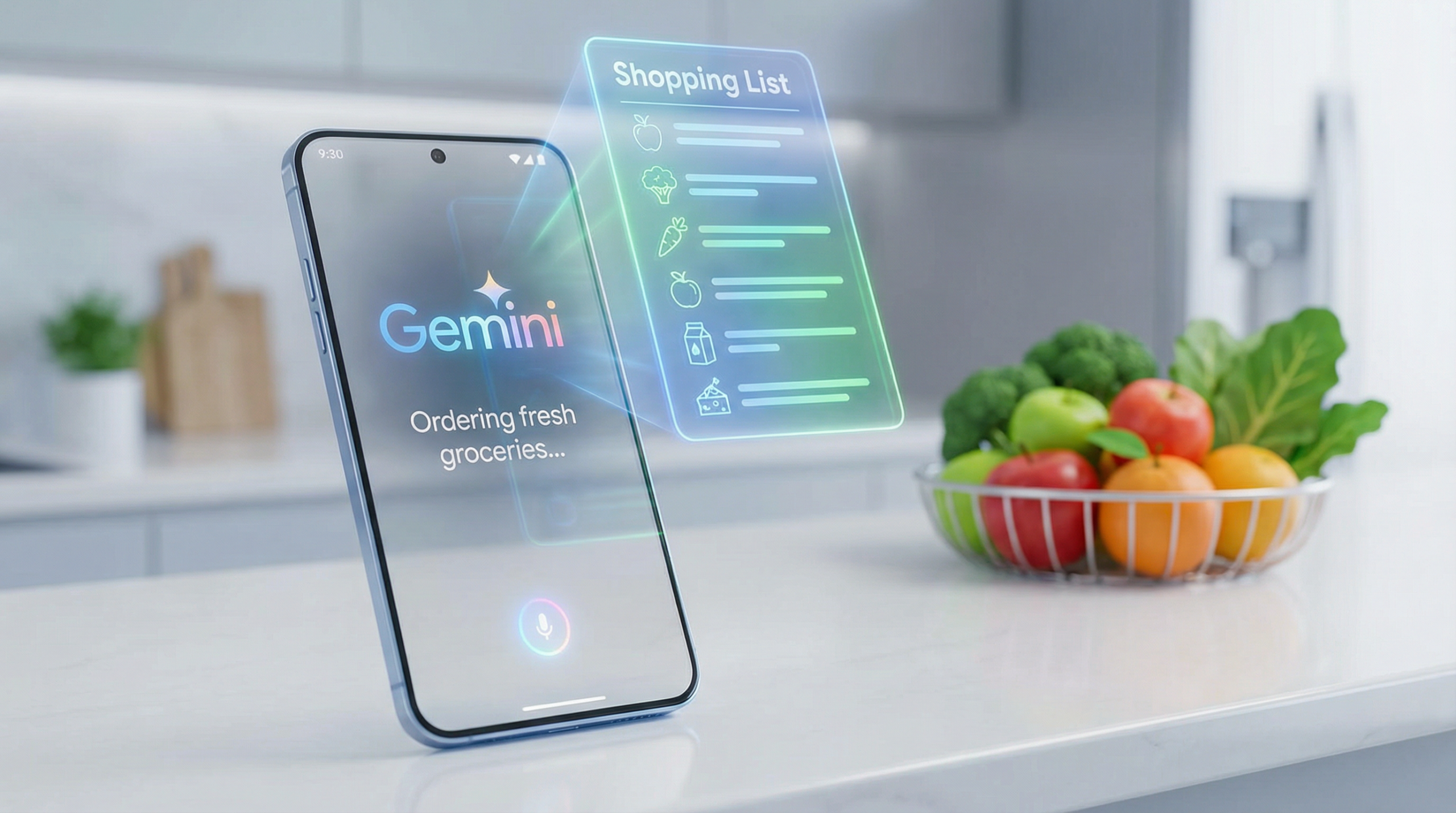
Google’s Gemini AI assistant can now order groceries, book rides, and complete tasks across apps on Pixel phones — and it’s a bigger deal than it sounds. The March 2026 Pixel drop transforms Gemini from a chatbot that answers questions into an agent that does things for you.
What the March Pixel Drop Delivers
Rolling out now to the Pixel 10, Pixel 10 Pro, and Pixel 10 Pro XL, Gemini’s new agentic feature lets you ask the assistant to complete work on your behalf inside select apps, including Uber and Grubhub. Tell Gemini to order your usual groceries from Grubhub, and it works in the background while you use your phone normally.
The key detail: you stay in control. Gemini will notify you when it needs a decision — say, choosing between two items or handling an out-of-stock product. Once your ride is booked or your grocery cart is ready, Gemini alerts you to review and submit the final order yourself. No rogue purchases.
This feature was first shown at Samsung’s Unpacked event last week and will also arrive on Samsung Galaxy S26 phones — notably ahead of Apple’s Siri, whose similar agentic capabilities have been delayed for months.
Beyond the Gemini agent, the March drop packs several other updates:
- Circle to Search upgrades — break down an outfit and search for individual pieces, plus virtual try-on across the Pixel 10 lineup
- Magic Cue improvements — proactive suggestions based on context (a friend asks for a restaurant rec, Gemini suggests options based on their preferences)
- Desktop mode for Pixel 8 and newer when connected to external displays
- Now Playing app for Pixel 6 and up, plus custom AI-generated app icons
Why It Matters
This is the shift the entire AI industry has been promising: from “ask me anything” to “let me handle it.” And Google is first to market with a real, shipping implementation on consumer phones.
The agentic approach — where AI operates autonomously within apps on your behalf — is fundamentally different from voice commands or smart replies. It’s the difference between asking “what’s on my grocery list?” and saying “order my grocery list.” That gap between information and action is where the real value lives.
Starting with Uber and Grubhub is smart. These are high-frequency, low-risk tasks where the cost of an AI mistake is a wrong food order, not a financial catastrophe. It’s the kind of training-wheels deployment that builds user trust before expanding to higher-stakes actions.
The competitive angle matters too. Apple has been teasing similar Siri capabilities but keeps pushing the timeline. Google shipping first on both Pixel and Samsung devices means Gemini’s agentic features reach a massive Android installed base while Apple is still in development. That head start in user adoption and real-world data collection compounds quickly.
The Bottom Line
Gemini ordering groceries sounds mundane, but it’s actually a milestone: the first mass-market AI assistant that crosses from answering to acting. The supervised approach — Gemini does the work, you approve the final step — strikes a smart balance between automation and control. If this works well with food delivery and rides, expect it to expand rapidly into travel booking, appointment scheduling, and beyond.
