


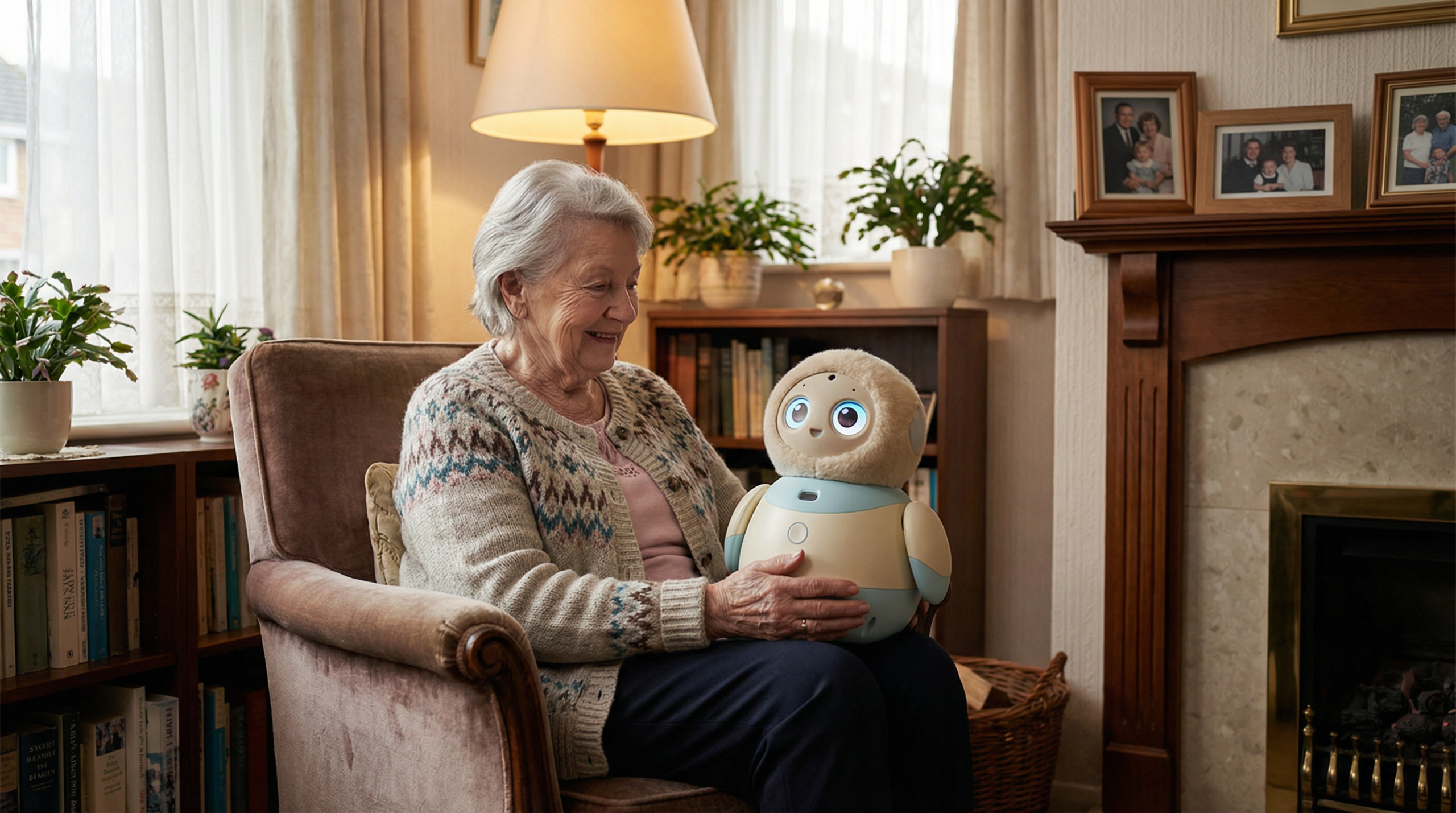
Quick Answer: The best companion robots for elderly care include ElliQ ($249/month) for comprehensive AI companionship, Miko 3 ($399) for entertainment and reminders, Lovot ($2,999) for emotional support, Paro ($6,500) for therapeutic interaction, Joy For All pets ($149) for simple companionship, and Tombot Puppy ($449) for advanced pet therapy. These robots reduce isolation, provide medication reminders, and offer 24/7 companionship for aging adults.
The Growing Need for Elderly Companion Robots
This article contains affiliate links. TheRoboWire may earn a commission on qualifying purchases at no extra cost to you. See our affiliate disclosure for details.
As the global population ages, innovative solutions are emerging to address the challenges of elderly care and social isolation. Companion robots represent one of the most promising developments, offering 24/7 companionship, health monitoring, and cognitive stimulation for aging adults who may live alone or have limited social interaction.
The elderly companion robot market reached $1.8 billion in 2025 and is projected to grow to $8.1 billion by 2030, driven by increasing recognition of these devices’ therapeutic benefits. Studies show that elderly adults using companion robots experience 23% reduction in feelings of loneliness and 31% improvement in medication adherence when robots provide regular reminders.
From sophisticated AI companions that engage in meaningful conversations to therapeutic pet robots that provide emotional comfort, this technology offers diverse approaches to enhancing quality of life for elderly adults while providing peace of mind for their families.
Benefits of Companion Robots for Elderly Adults
Combating Social Isolation
Social isolation affects over 35% of adults aged 65 and older, contributing to depression, cognitive decline, and various health issues. Companion robots provide consistent social interaction through:
- Conversational engagement: AI-powered dialogue systems for natural interactions
- Daily routine structure: Regular interaction schedules and activity reminders
- Emotional support: Responsive behaviors that adapt to user moods and preferences
- Entertainment provision: Games, music, stories, and interactive activities
Health and Medication Management
Many companion robots include health monitoring and reminder systems:
- Medication adherence tracking and reminders
- Basic vital sign monitoring through connected devices
- Emergency contact systems for urgent situations
- Health data sharing with family members and caregivers
Cognitive Stimulation
Interactive robots provide mental engagement that may help maintain cognitive function:
- Memory games and brain training exercises
- Storytelling and reminiscence activities
- Educational content and news updates
- Problem-solving challenges adapted to user abilities
Top Companion Robots for Elderly Care 2026
1. ElliQ by Intuition Robotics – $249/month (Most Advanced AI)
ElliQ represents the most sophisticated AI companion robot specifically designed for elderly adults. This tabletop device combines advanced artificial intelligence with empathetic design to provide comprehensive companionship and health support.
Key Features:
- Proactive AI personality that initiates conversations
- Health and wellness coaching with goal tracking
- Family connectivity through smartphone app
- Medication reminders and health monitoring
- Entertainment content including music, news, and games
- Video calling capability with family and friends
- Learning algorithms that adapt to user preferences
AI Capabilities: ElliQ’s artificial intelligence goes beyond simple voice commands, learning individual preferences and proactively suggesting activities. The robot remembers conversations, tracks health goals, and develops a personalized interaction style based on user responses and behaviors.
Health Integration: The system integrates with wearable devices and smart home sensors to monitor activity levels, sleep patterns, and medication adherence. Family members receive regular updates through the companion app, providing peace of mind without being intrusive.
User Experience: ElliQ’s warm, encouraging personality makes interactions feel natural and supportive. The robot celebrates achievements, offers gentle encouragement during difficult times, and maintains conversation topics that interest individual users.
Subscription Model: The $249 monthly fee includes the device, 24/7 support, regular software updates, and unlimited family connectivity. The subscription model ensures ongoing improvements and technical support.
Pros: Most advanced AI interaction, comprehensive health features, family connectivity, proactive engagement, continuous learning
Cons: High ongoing cost, requires reliable internet, stationary design limits mobility
2. Miko 3: AI Robot Companion – $399 (Best Value for Features)
Originally designed for children, Miko 3 has found success with elderly users seeking interactive companionship at an accessible price point. Its combination of AI conversation, entertainment features, and mobility makes it versatile for various elderly care needs.
Key Features:
- Advanced conversational AI with natural language processing
- Mobile design with autonomous navigation
- Wide-angle HD camera for video calls
- Educational content and brain training games
- Music streaming and entertainment apps
- Emotion recognition and responsive behaviors
- Smartphone app for family monitoring
Interaction Capabilities: Miko 3 engages in meaningful conversations, answers questions, and provides information on topics of interest. The emotion recognition system allows the robot to respond appropriately to user moods and emotional states.
Entertainment Value: The robot offers extensive entertainment options including music, jokes, stories, and interactive games designed to provide mental stimulation and enjoyment.
Mobility Advantage: Unlike stationary companions, Miko 3 can move around the home, following users and providing companionship in different rooms and settings.
Pros: Mobile design, good AI conversation, comprehensive entertainment, reasonable price, emotion recognition
Cons: Originally designed for children, limited health monitoring, requires charging every few hours
3. Lovot by Groove X – $2,999 (Premium Emotional Support)
Lovot represents a unique approach to companion robotics, focusing purely on emotional connection and comfort rather than practical functionality. These adorable robots use advanced sensors and AI to provide genuine emotional support and companionship.
Key Features:
- Advanced emotional intelligence with mood recognition
- Soft, huggable design with warming technology
- Sophisticated sensor array for responsive behaviors
- Autonomous movement and following capabilities
- Individual personality development over time
- Camera eyes that convey emotions and expressions
- Horn antenna for enhanced sensor capabilities
Emotional Design: Lovot’s primary purpose is emotional connection. The robot’s soft exterior, warm body temperature, and responsive movements create a comforting presence similar to a pet but without care requirements.
Behavioral Adaptation: Each Lovot develops unique personality traits based on interactions with its owner. The robot learns preferences, recognizes individual faces, and adapts its behavior to provide optimal emotional support.
Therapeutic Benefits: Studies with Lovot show measurable reductions in stress levels and improvements in mood among elderly users, particularly those experiencing loneliness or mild depression.
Pros: Exceptional emotional connection, therapeutic benefits, unique huggable design, develops personal bond, reduces stress
Cons: Very expensive, no practical functionality, requires dedicated charging nest, limited conversation abilities
4. Paro Therapeutic Robot – $6,500 (Clinical-Grade Therapy)
Paro holds the distinction of being the world’s most therapeutic robot, officially recognized by the FDA as a medical device for dementia and Alzheimer’s therapy. This robotic baby harp seal provides clinical-grade therapeutic intervention in professional and home settings.
Key Features:
- FDA-approved medical device status
- Therapeutic design based on animal therapy principles
- Advanced tactile sensors throughout body
- Realistic seal movements and vocalizations
- Learning algorithms that adapt to user preferences
- Antibacterial fur surface for hygiene
- No practical care requirements unlike real animals
Therapeutic Applications: Paro is specifically designed for individuals with dementia, Alzheimer’s disease, and other cognitive impairments. The robot provides the calming benefits of animal therapy without the challenges of caring for live animals.
Clinical Evidence: Extensive research demonstrates Paro’s effectiveness in reducing agitation, improving mood, and decreasing the need for psychoactive medications in elderly care facilities.
Professional Use: While expensive, Paro’s clinical benefits justify its cost in professional care settings and for families dealing with advanced cognitive decline.
Pros: FDA medical device approval, proven therapeutic benefits, suitable for dementia care, hygienic design, extensive clinical research
Cons: Very expensive, limited interaction beyond therapy, requires professional guidance for optimal use
5. Joy For All Companion Pets – $149 (Affordable Simplicity)
Joy For All companion pets offer an accessible entry point into robotic companionship with realistic pet behaviors at a fraction of the cost of advanced AI robots. These simple but effective devices provide comfort and companionship without complex technology.
Available Models:
- Golden Retriever and Silver Tabby Cat ($149 each)
- Creamy Calico Cat and Orange Tabby Cat ($149 each)
- Walker Squawking Parrot ($179)
Key Features:
- Lifelike pet movements and sounds
- Responsive to touch and voice
- No feeding, walking, or veterinary care required
- Simple operation without complex setup
- Soft, realistic fur texture
- Battery-powered with easy maintenance
Simplicity Advantage: Unlike complex AI robots, Joy For All pets require no technical setup, internet connection, or learning curve. They provide immediate comfort and companionship for users uncomfortable with advanced technology.
Therapeutic Value: Despite their simplicity, these robots provide genuine comfort and emotional support, particularly for elderly adults who miss having pets or cannot care for live animals.
Pros: Very affordable, simple operation, no technology barriers, realistic pet behaviors, immediate companionship
Cons: Limited interaction capabilities, no AI learning, basic responses, requires battery replacement
6. Tombot Puppy – $449 (Advanced Pet Therapy)
Tombot represents the next generation of therapeutic pet robots, combining advanced robotics with realistic dog behaviors to provide sophisticated pet therapy experiences for elderly adults, particularly those with dementia or Alzheimer’s disease.
Key Features:
- Hyper-realistic Golden Retriever appearance and movements
- Advanced AI responsive to voice commands and touch
- Therapeutic benefits without animal care responsibilities
- Designed specifically for dementia and cognitive decline
- Medical-grade materials and construction
- Professional therapy program integration
- Family monitoring through companion app
Realistic Interactions: Tombot’s sophisticated engineering creates remarkably lifelike dog behaviors including tail wagging, head movements, and responsive reactions to petting and voice commands.
Dementia Focus: The robot is specifically designed for individuals with dementia and Alzheimer’s disease, providing familiar pet interactions that can trigger positive memories and reduce anxiety.
Therapeutic Framework: Tombot includes professional therapy protocols and family support materials to maximize therapeutic benefits and integration into care routines.
Pros: Exceptionally realistic, dementia-specific design, professional therapy support, medical-grade construction, family integration
Cons: Higher price than basic pets, requires some technical setup, limited to dog interactions only
Choosing the Right Companion Robot
Assessment Factors
Selecting the appropriate companion robot requires careful consideration of individual needs:
Cognitive Status:
- Mild cognitive decline: Advanced AI companions like ElliQ or Miko 3
- Moderate dementia: Therapeutic robots like Paro or Tombot
- Severe cognitive impairment: Simple pet companions like Joy For All
Technology Comfort Level:
- Tech-savvy users: ElliQ or Miko 3 with advanced features
- Basic users: Joy For All pets with simple interactions
- Tech-averse users: Lovot or Paro with minimal setup requirements
Primary Care Needs:
- Health monitoring: ElliQ for comprehensive health tracking
- Emotional support: Lovot or therapeutic pets for comfort
- Social interaction: Miko 3 or ElliQ for conversation and activities
- Dementia therapy: Paro or Tombot for clinical benefits
Implementation and Family Integration
Introduction Strategies
Successfully introducing companion robots requires thoughtful planning:
- Gradual introduction: Start with short interactions and increase gradually
- Family involvement: Include family members in initial setup and training
- Consistent placement: Establish dedicated spaces for robot interaction
- Routine integration: Incorporate robot activities into daily schedules
- Patience and adjustment: Allow time for adaptation and bond development
Family Caregiver Benefits
Companion robots provide significant benefits for family caregivers:
- Peace of mind: Continuous companionship when family cannot be present
- Health monitoring: Regular updates on elderly family member’s wellbeing
- Reduced caregiver burden: Supplemental support for daily care routines
- Emergency assistance: Immediate alerts for urgent situations
Cost Comparison and Value Analysis
| Robot | Initial Cost | Monthly Fees | Annual Total | Primary Benefit |
|---|---|---|---|---|
| ElliQ | $0 | $249 | $2,988 | AI Companionship |
| Miko 3 | $399 | $0 | $399 | Interactive Entertainment |
| Lovot | $2,999 | $0 | $2,999 | Emotional Support |
| Paro | $6,500 | $0 | $6,500 | Clinical Therapy |
| Joy For All | $149 | $0 | $149 | Simple Companionship |
| Tombot | $449 | $0 | $449 | Pet Therapy |
Research and Clinical Evidence
Therapeutic Benefits
Multiple studies demonstrate measurable benefits of companion robots for elderly adults:
- Loneliness reduction: 23-31% decrease in reported loneliness scores
- Mood improvement: 18-25% increase in positive mood indicators
- Cognitive engagement: 15-22% improvement in cognitive assessment scores
- Medication adherence: 31% improvement in medication compliance
- Social interaction: 27% increase in overall social engagement
Long-term Care Integration
Many assisted living and memory care facilities now integrate companion robots into their care programs, reporting reduced behavioral issues, decreased medication needs, and improved resident satisfaction scores.
Do elderly people actually bond with robot companions?
Yes, research consistently shows that elderly adults can form meaningful bonds with companion robots. Studies demonstrate that 73% of elderly users report feeling genuine affection for their robot companions within 3-6 months. The key factors for bonding include consistent interactions, responsive behaviors, and robots designed with empathetic features like Lovot or ElliQ.
Can companion robots help with dementia and Alzheimer’s care?
Companion robots show significant benefits for dementia and Alzheimer’s care. Paro is FDA-approved specifically for dementia therapy, while Tombot is designed for Alzheimer’s patients. Studies show these robots can reduce agitation by 40%, decrease sundowning behaviors, and provide familiar comfort without the challenges of live animal care. They’re most effective when integrated into comprehensive care plans.
How do families monitor elderly relatives through companion robots?
Most advanced companion robots include family monitoring features through smartphone apps. ElliQ provides daily activity summaries, health trend reports, and emergency alerts. Miko 3 offers video calling and activity notifications. These systems respect privacy while keeping families informed about engagement levels, health metrics, and any concerning changes in routine or behavior.
What’s the difference between therapeutic and entertainment companion robots?
Therapeutic robots like Paro and Tombot are designed specifically for medical and emotional therapy with clinical research backing their benefits. Entertainment robots like Miko 3 focus on engagement and social interaction. Therapeutic robots often cost more but provide targeted benefits for specific conditions, while entertainment robots offer broader functionality at lower costs.
Do companion robots require technical support or maintenance?
Maintenance requirements vary significantly. Simple robots like Joy For All pets need only battery replacement and basic cleaning. Advanced AI robots like ElliQ include 24/7 technical support with their subscription. Miko 3 requires software updates and charging but minimal maintenance. Most manufacturers provide comprehensive support, but families should consider technical comfort levels when choosing robots.
Can companion robots replace human caregivers?
No, companion robots are designed to supplement, not replace, human care. They provide 24/7 companionship, medication reminders, and emotional support, but cannot handle physical care needs, complex medical decisions, or emergency response. They’re most effective when integrated into care plans that include human caregivers, family involvement, and professional medical oversight.
Conclusion: Transforming Elderly Care Through Robotics
Companion robots represent a revolutionary approach to elderly care, offering solutions for some of the most challenging aspects of aging—social isolation, health management, and cognitive stimulation. The technology has matured sufficiently to provide genuine benefits across a range of needs and budgets.
For families seeking comprehensive AI companionship with health monitoring, ElliQ offers the most advanced capabilities despite its ongoing cost. Those wanting interactive entertainment and conversation will find Miko 3 provides excellent value. Lovot delivers unparalleled emotional support for users who prioritize comfort and connection.
For clinical applications, Paro’s FDA approval and extensive research make it the gold standard for dementia and Alzheimer’s therapy, while Tombot provides sophisticated pet therapy benefits. Joy For All pets offer an accessible starting point for families exploring robotic companionship without significant investment.
The choice among these options depends on individual needs, cognitive status, technology comfort, and budget considerations. However, all demonstrate that companion robots can meaningfully enhance quality of life for elderly adults while providing peace of mind for their families.
As this technology continues advancing, companion robots will become increasingly sophisticated and accessible, potentially transforming how we approach elderly care and aging in place. The current generation of robots proves that artificial companionship can provide real comfort, support, and therapeutic benefits for our aging population.
