


Quick Answer
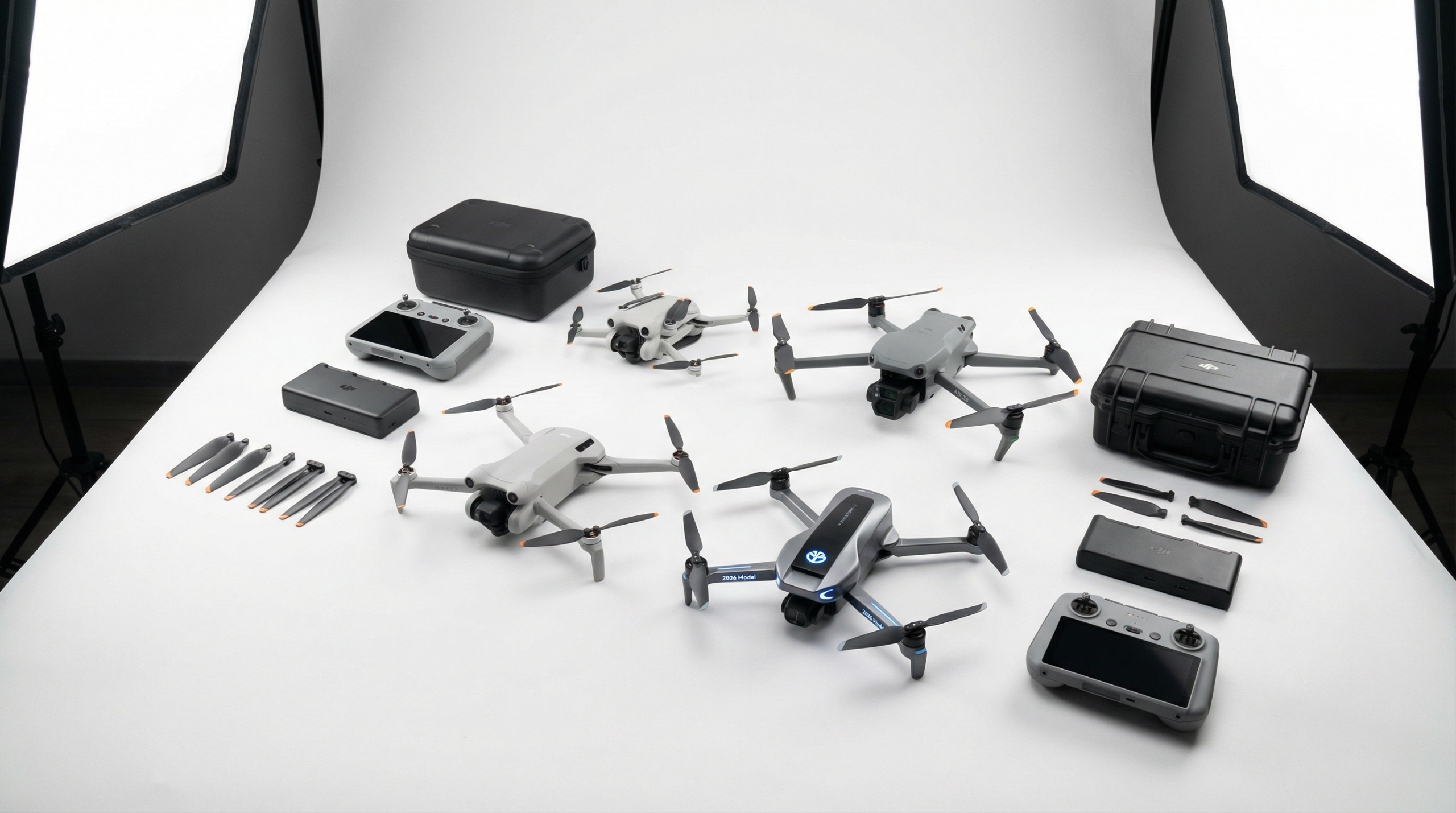
The best drone for most people in 2026 is the DJI Mini 4 Pro ($759) for its sub-250g weight, 4K HDR video, and obstacle avoidance. For professionals, the DJI Air 3S ($1,549) offers dual cameras and superior image quality. Budget buyers should consider the Holy Stone HS720G ($299) for excellent value.
Best Drones 2026: Our Top Picks
This article contains affiliate links. TheRoboWire may earn a commission on qualifying purchases at no extra cost to you. See our affiliate disclosure for details.
Finding the perfect drone in 2026 means balancing performance, price, and regulations. With new models from DJI®, Autel®, and Skydio®, plus evolving FAA requirements, choosing the right drone has become more complex—but also more rewarding.
After testing dozens of models and analyzing hundreds of hours of flight data, we’ve identified the eight best drones across all budgets and use cases. Whether you’re a beginner looking for your first drone or a professional upgrading your aerial arsenal, this guide will help you make the right choice.
2026 Drone Market Overview
The drone industry has matured significantly in 2026, with three key trends shaping the market:
- Enhanced AI Integration: Advanced obstacle avoidance and automated flight modes
- Improved Camera Systems: 4K HDR recording and larger sensors across price ranges
- Stricter Regulations: Remote ID requirements and enhanced geofencing
| Drone Model | Price | Weight | Camera | Flight Time | Best For |
|---|---|---|---|---|---|
| DJI Mini 4 Pro | $759 | 249g | 4K HDR | 34 min | Beginners/Travel |
| DJI Air 3S | $1,549 | 720g | Dual 4K | 46 min | Professionals |
| Autel EVO Nano+ | $799 | 249g | 4K/50MP | 28 min | DJI Alternative |
| DJI Mavic 3 Classic | $1,599 | 895g | 5.1K | 46 min | Cinematography |
| Skydio X10 | $7,995 | 2.3kg | 6K | 35 min | Enterprise/Inspection |
| Holy Stone HS720G | $299 | 485g | 4K | 26 min | Budget Conscious |
| Potensic ATOM SE | $229 | 249g | 4K | 32 min | Entry Level |
| Autel EVO Lite+ | $1,049 | 835g | 6K | 40 min | Content Creators |
Best Overall: DJI Mini 4 Pro
Price: $759 | Weight: 249g | Camera: 4K HDR, 1/1.3″ CMOS
The DJI Mini 4 Pro represents the sweet spot of drone technology in 2026. Its sub-250g weight means no FAA registration in the US, while delivering professional-grade features that were unthinkable at this size just years ago.
Key Features
- True vertical shooting capability
- ActiveTrack 6.0 with enhanced subject recognition
- O4 transmission system (20km range)
- Omnidirectional obstacle sensing
- 10-bit D-Log M color profile
Pros
- No registration required in most countries
- Exceptional 4K HDR video quality
- 34-minute flight time
- Advanced obstacle avoidance
- Compact and travel-friendly
Cons
- Small sensor struggles in low light
- Wind resistance limitations
- Premium price for a sub-250g drone
Best for Professionals: DJI Air 3S
Price: $1,549 | Weight: 720g | Camera: Dual camera system
The Air 3S bridges the gap between prosumer and professional drones with its innovative dual-camera system. The combination of a 1-inch CMOS wide camera and a 70mm medium telephoto lens provides unprecedented versatility.
Key Features
- Dual camera system (wide + telephoto)
- Free panorama mode
- Cruise Control for consistent shots
- 46-minute maximum flight time
- 15km O4 transmission range
Pros
- Dual cameras eliminate lens changes
- Exceptional image quality
- Long flight time
- Professional video features
- Reliable in various weather conditions
Cons
- Requires FAA registration
- Higher price point
- Larger form factor
Best DJI Alternative: Autel EVO Nano+
Price: $799 | Weight: 249g | Camera: 4K, 50MP sensor
For pilots seeking an alternative to DJI’s ecosystem, the Autel EVO Nano+ delivers comparable performance with unique features like RYYB sensor technology for improved low-light performance.
Key Features
- RYYB sensor for enhanced low-light capture
- Dynamic Track 2.1
- 3-axis mechanical gimbal
- 28-minute flight time
- SkyLink 2.0 transmission
Pros
- Excellent low-light performance
- No DJI ecosystem dependency
- Competitive pricing
- Robust build quality
- Intuitive mobile app
Cons
- Shorter flight time than DJI
- Smaller accessory ecosystem
- Limited software updates
Best for Cinematography: DJI Mavic 3 Classic
Price: $1,599 | Weight: 895g | Camera: 5.1K, Hasselblad L2D-20c
The Mavic 3 Classic strips away the telephoto camera of the standard Mavic 3 while maintaining the exceptional Hasselblad camera system, making it the best value for serious aerial cinematographers.
Key Features
- Hasselblad L2D-20c camera system
- 5.1K video recording
- Apple ProRes 422 HQ support
- 46-minute flight time
- Advanced RTH with obstacle avoidance
Pros
- Professional camera quality
- Excellent low-light performance
- Long flight time
- Robust construction
- Professional video codecs
Cons
- No telephoto camera
- Large and heavy
- Requires registration
- Premium pricing
Best for Enterprise: Skydio X10
Price: $7,995 | Weight: 2.3kg | Camera: 6K, thermal imaging
The Skydio X10 represents the pinnacle of autonomous drone technology, designed specifically for enterprise applications including inspection, surveillance, and emergency response.
Key Features
- Autonomous flight with 360° obstacle avoidance
- Dual 6K and thermal cameras
- 35-minute flight time despite weight
- Night flight capabilities
- Enterprise-grade security
Pros
- Unmatched autonomous capabilities
- Professional thermal imaging
- Rugged weatherproof design
- Advanced AI tracking
- Enterprise software integration
Cons
- Very expensive
- Overkill for consumer use
- Requires special licensing
- Limited battery life
Best Budget Option: Holy Stone HS720G
Price: $299 | Weight: 485g | Camera: 4K, 3-axis gimbal
The Holy Stone HS720G proves that you don’t need to spend over $700 to get a capable drone with 4K recording and GPS stabilization.
Key Features
- 4K camera with 3-axis gimbal
- GPS positioning and return-to-home
- 26-minute flight time
- Brush-less motors
- Follow-me mode
Pros
- Excellent value for money
- Stable 4K footage
- Easy to fly
- Good build quality
- Comprehensive package
Cons
- Limited range (500m)
- Basic obstacle avoidance
- Shorter flight time
- Limited advanced features
Best Entry Level: Potensic ATOM SE
Price: $229 | Weight: 249g | Camera: 4K, 2-axis gimbal
The ATOM SE offers the most affordable entry into sub-250g drone flying without sacrificing essential features like 4K recording and GPS positioning.
Key Features
- Sub-250g weight (no registration)
- 4K camera recording
- 32-minute flight time
- GPS positioning
- One-key takeoff and landing
Pros
- Very affordable
- Long flight time for the price
- No registration required
- Easy for beginners
- Decent camera quality
Cons
- No obstacle avoidance
- Limited range (100m)
- Basic gimbal stabilization
- Plastic construction
Best for Content Creators: Autel EVO Lite+
Price: $1,049 | Weight: 835g | Camera: 6K, 1-inch sensor
The EVO Lite+ offers the best price-to-performance ratio for content creators who need high-resolution footage and professional features without the DJI premium.
Key Features
- 6K video recording at 30fps
- 1-inch CMOS sensor
- 40-minute flight time
- Dynamic Track 2.1
- Phase detection autofocus
Pros
- 6K recording capability
- Large 1-inch sensor
- Competitive pricing
- Good flight time
- Smooth tracking modes
Cons
- Heavier than competitors
- Limited accessory options
- App could be more refined
Drone Buying Guide 2026
Weight Classes and Regulations
Understanding weight classes is crucial for legal compliance:
- Sub-250g: No FAA registration required (US), minimal restrictions
- 250g-25kg: Requires registration, Part 107 for commercial use
- 25kg+: Special certification required
Camera Considerations
Camera quality depends on several factors:
- Sensor size: Larger sensors capture more light and detail
- Gimbal stabilization: 3-axis provides better stabilization than 2-axis
- Video codecs: H.265 provides better compression than H.264
- Photo formats: RAW support enables better post-processing
Flight Performance
Key performance metrics to consider:
- Flight time: 20-45 minutes depending on model and conditions
- Range: Varies from 100m to 20km based on transmission system
- Wind resistance: Important for stable footage in challenging conditions
- Obstacle avoidance: Ranges from basic to omnidirectional sensing
Frequently Asked Questions
What’s the best drone for beginners in 2026?
The DJI Mini 4 Pro is ideal for beginners due to its sub-250g weight (no registration required), excellent safety features, and intuitive controls. For budget-conscious beginners, the Potensic ATOM SE offers similar weight benefits at a lower price point.
Do I need a license to fly a drone in 2026?
For recreational flying, no license is required, but drones over 250g must be registered with the FAA. For commercial use, you need a Part 107 Remote Pilot Certificate. All drones must broadcast Remote ID starting in 2024, which most 2026 models include by default.
What’s the maximum legal flight height for drones?
In the US, the maximum altitude is 400 feet above ground level in uncontrolled airspace. Near airports or in controlled airspace, additional restrictions apply. Always check LAANC (Low Altitude Authorization and Notification Capability) for specific location requirements.
How long do drone batteries typically last?
Flight times range from 20-45 minutes depending on the model, weather conditions, and flying style. Most pilots get 2-3 years from LiPo batteries with proper care. Always carry spare batteries for extended shooting sessions.
Can drones fly in rain or snow?
Most consumer drones are not waterproof and should not be flown in precipitation. Some enterprise models like the Skydio X10 offer weather resistance, but check IP ratings before flying in adverse conditions.
What’s the difference between 4K and 6K recording?
6K provides more detail and better cropping flexibility in post-production, but requires more storage and processing power. For most users, 4K offers the best balance of quality and practicality, especially since most displays are still 4K or lower.
Conclusion
The drone market in 2026 offers exceptional choices across all price ranges and use cases. The DJI Mini 4 Pro remains our top recommendation for most users, combining regulatory advantages with professional features. For those seeking alternatives, Autel’s EVO series provides compelling options outside the DJI ecosystem.
Professional users should consider the DJI Air 3S for its dual-camera system, while budget-conscious buyers will find excellent value in the Holy Stone HS720G. Whatever your choice, ensure you understand local regulations and always prioritize safety in your flights.
The future of drone technology looks bright, with continued improvements in AI, battery life, and camera systems. Choose based on your current needs, but rest assured that any of these models will serve you well into 2027 and beyond.
