


Drone Racing League: The Complete Guide to Professional FPV Racing
The Drone Racing League (DRL) turned first-person view drone racing into a televised professional sport. Founded in 2015, it combines custom-built hardware, FPV piloting skill, and AI research into a format that reaches millions of viewers worldwide. If you want to understand how professional drone racing works, the league structure, the technology, the pilots, and what happened to the original thedroneracingleague.com field, this guide covers it all.
What Is the Drone Racing League?
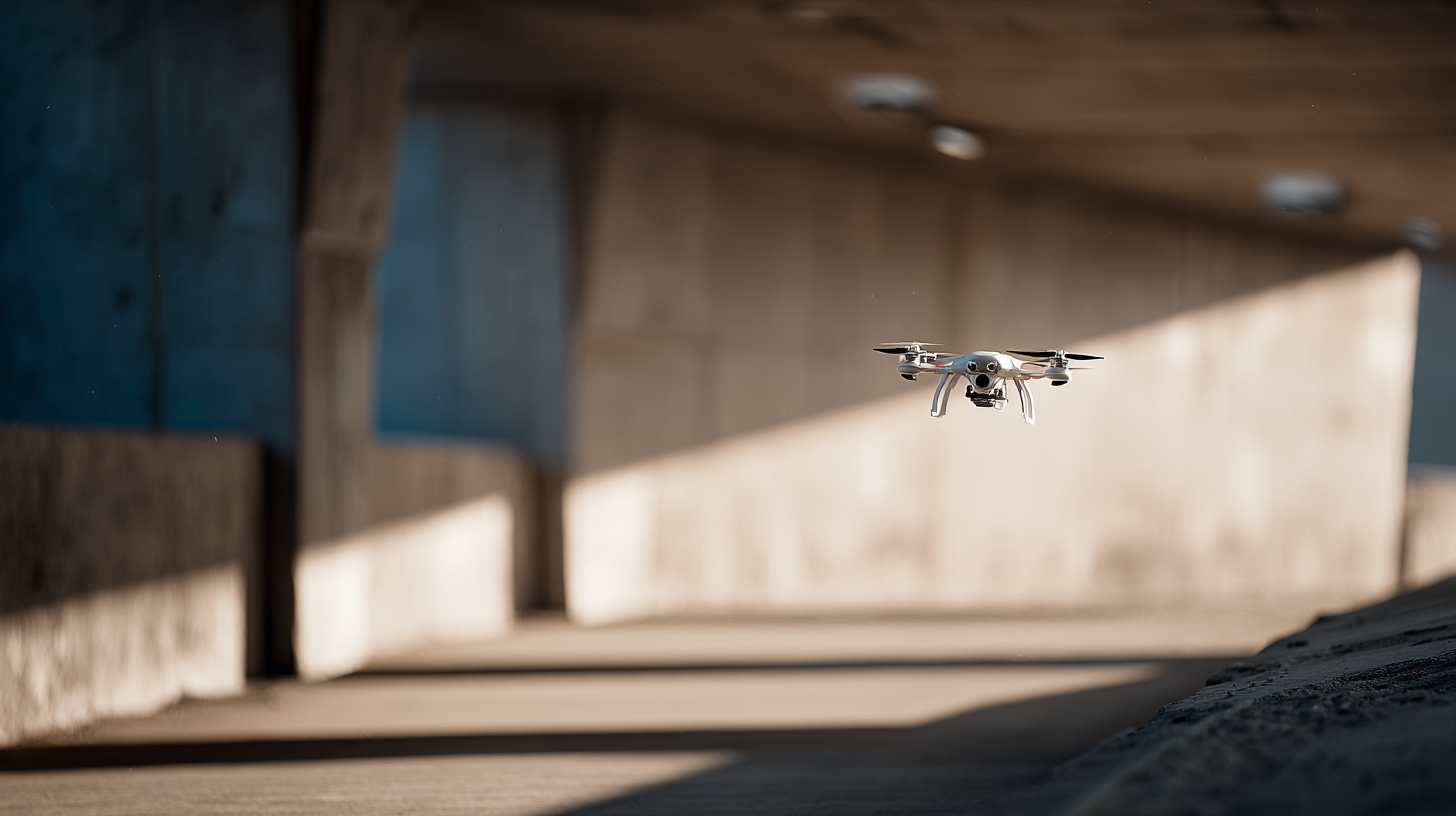
DRL is a professional sports organization built around FPV (first-person view) drone racing. Pilots wear video goggles that stream a live camera feed from their drone, giving them a cockpit-like perspective at speeds over 80 mph. Races take place through custom three-dimensional courses built inside arenas, stadiums, and urban spaces.
The league operates on a closed-competition model: all pilots fly identical DRL-built drones. This eliminates hardware advantages and makes skill the deciding factor. Every race drone is manufactured in-house, tested to identical specifications, and assigned to pilots at the event.
DRL launched publicly in January 2016 after founder Nicholas Horbaczewski secured early backing from Stephen Ross (Miami Dolphins owner) and RSE Ventures. The league’s first broadcast deal with ESPN brought drone racing to a mainstream sports audience for the first time.
History and Timeline
2015, Founding. Nicholas Horbaczewski, former Chief Revenue Officer at Tough Mudder, founded DRL with a single idea: make drone racing a real spectator sport. Ryan Gury joined as Director of Product and led drone hardware development.
2016, Season 1 launch. DRL broadcast its first season on ESPN, ESPN2, and ESPN3. Courses included Miami’s Sun Life Stadium and the Biltmore Hotel in Coral Gables. Jordan “Jet” Temkin won the inaugural championship and signed a $100,000 professional contract, the first of its kind in drone racing. DRL raised $12 million in Series A funding from RSE Ventures and Lux Capital.
2017, International expansion. Season 3 moved to Sky Sports and ProSiebenSat.1 for European distribution. The championship at Alexandra Palace in London was the first drone race with official betting markets, partnered with Paddy Power Betfair. Jet Temkin won his second consecutive title. DRL raised $20 million in Series B, with investors including WWE, Allianz, Sky, and Liberty Media.
2018, Racer3 and new champion. The Racer3 drone debuted with sub-one-second 0–80 mph acceleration and a 600-drone fleet. Paul “Nurk” Nurkkala took the championship. DRL’s RacerX prototype set a Guinness World Record at 163.5 mph, the fastest racing drone ever certified.
2019, NBC Sports deal. DRL transitioned to NBC Sports, with 44 hours of coverage across NBCSN and the NBC broadcast network. Rookie pilot Alex Vanover won the championship in his first professional season. The Racer4 drone launched with updated propellers and improved performance.
2020–2021, AI and esports expansion. DRL launched the Artificial Intelligence Robotic Racing (AIRR) Circuit, offering $1 million in prizes to university teams building autonomous drone systems. The same year, DraftKings became the official betting partner. The DRL Simulator on Steam grew into a full esports platform for identifying new talent.
2022–2025, Media evolution. DRL continued race events while change its media distribution mix. The original thedroneracingleague.com field was eventually retired; the league’s primary web presence moved to drl.io.
The Technology: DRL Race Drones
Every DRL race uses identical custom drones built in-house. This is a deliberate design choice, no pilot can win because they spent more on hardware.
Racer2 (2016): Top speed 80 mph, battery life 2–3 minutes, fleet of 100 units. Ultra-bright LED panels for viewer visibility.
Racer3 (2017–2018): Top speed 80 mph with 0–80 mph in under one second. Altitude capability up to 6–8 km. Fleet expanded to 600 units. Custom radio system enabling navigation through concrete structures.
RacerX (record run): A prototype built purely for speed. Set the Guinness World Record at 163.5 mph, the highest speed ever recorded for a racing drone in official conditions.
Racer4 (2019+): Refined propeller design, increased weight for stability at high speeds. Used across the NBC Sports broadcast seasons.
All drones run proprietary firmware and use a DRL-developed radio system. The closed-loop hardware approach means DRL controls the entire product, they manufacture, test, and retire drones on their own schedule.
Race Format
A standard DRL race event works in stages:
Qualifying rounds narrow down the pilot field. Each pilot gets solo timed laps to establish baseline speed.
Semifinal heats place pilots in groups of six. Racers compete head-to-head through the same course simultaneously. The top three from each heat advance.
Finals bring the top finishers together for a points-based championship round. First place earns maximum points; totals across the season determine the champion.
Course design is a DRL signature. Courses are three-dimensional, pilots fly through gates, under obstacles, around sharp turns, and through vertical loops. Events have taken place at:
- Miami’s Sun Life Stadium
- The Biltmore Hotel, Coral Gables
- Alexandra Palace, London
- Allianz Arena, Munich
- World’s largest indoor ski slope (Dubai)
- Nassau Coliseum, New York
Each venue presents different challenges: lighting conditions, obstacle density, and course geometry vary big.
The DRL Simulator and Esports Pathway
DRL built one of the most effective talent pipelines in professional sports through its simulator program.
The DRL Simulator on Steam offers 50 training missions that replicate real FPV physics. It is free-to-play and used by hundreds of thousands of aspiring pilots.
The Swatch DRL Tryouts is an annual tournament run entirely within the simulator. Top finishers receive professional contracts and compete in live DRL events. Two notable graduates:
- Jacob “Jawz” Schneider, recruited directly from the simulator, competed in broadcast seasons
- Emmanuel “UFO” Mota, simulator champion turned professional pilot with a $75,000 contract
This pathway means DRL can find talent globally without geographic gatekeeping. A pilot in Manila or Warsaw has the same tryout path as one in New York.
AI Autonomous Racing: The AIRR Circuit
The Artificial Intelligence Robotic Racing (AIRR) Circuit is DRL’s most technically ambitious project. The concept: build autonomous drone systems that complete DRL courses without any human pilot input.
DRL opened AIRR to university research teams and independent engineers. Participants design and train AI frameworks to interpret real-time sensor data and navigate gates, turns, and obstacles at race speeds. Total prize pool: $1 million.
The AIRR Circuit positions DRL at the intersection of entertainment and applied AI research. Lockheed Martin and the U.S. Air Force have both sponsored DRL events, reflecting genuine interest from defense and aerospace in real-world autonomous navigation research.
Autonomous drones face different engineering problems than human-piloted ones. A human pilot reads the course visually and reacts in milliseconds. An autonomous system must parse sensor inputs, make path decisions, and execute motor commands, all within the same time window. AIRR results feed directly into real-world robotics research.
DRL Pilots and the Professional Ecosystem
DRL created the first category of full-time professional FPV racing pilots. The ecosystem includes:
Jordan “Jet” Temkin, two-time DRL champion (2016, 2017). First pilot to sign a six-figure drone racing contract. Became the face of the sport during its early broadcast years.
Paul “Nurk” Nurkkala, 2018 champion. Known for aggressive flying style and technical precision through tight course sections.
Alex Vanover, 2019 champion as a rookie. Won the title in his first professional season, demonstrating that the simulator-to-professional pathway produces competitive pilots.
Pilots sign contracts with DRL that cover race appearance fees, winnings, and brand partnership obligations. Unlike traditional sports leagues, DRL manages athlete branding centrally, pilots appear in broadcast content, social media campaigns, and simulator promotion as part of their agreements.
Broadcast Partners and Sponsors
DRL’s distribution history reflects its growth from niche sport to mainstream broadcast property:
2016: ESPN, Sky Sports, ProSiebenSat.1, Twitter, Disney XD, FOX Sports Asia, OSN 2019–present: NBC Sports (NBCSN + NBC broadcast), continued international syndication Streaming: Amazon Prime Video has carried DRL content in select markets
Major sponsors have included: Allianz (title sponsor), BMW, Swatch, Amazon, T-Mobile, Cox Communications, DraftKings, Algorand, the U.S. Air Force, and Lockheed Martin. The combination of defense contractors and consumer brands reflects DRL’s dual identity as both entertainment and applied technology platform.
Where Is DRL Now?
The Drone Racing League continues to operate under the drl.io field. The original thedroneracingleague.com is no longer active, links pointing to it, including references on educational and institutional pages, now resolve to dead ends.
For anyone researching DRL today: the league’s main presence is at drl.io. The DRL Simulator remains available on Steam. The AIRR Circuit continues to run autonomous racing challenges.
The broader FPV racing community has grown independently of DRL. MultiGP organizes grassroots drone racing events globally. The International Drone Racing Association (IDRA) has worked on standardization. DRL sits at the professional, broadcast end of this spectrum, the equivalent of Formula 1 in a world that also has karting clubs and amateur track days.
Why DRL Matters for Robotics
For the robotics community, DRL is more than a spectator sport. The engineering problems it solves, real-time navigation at high speed, autonomous system performance under race conditions, drone hardware pushed to physical limits, are directly relevant to applied robotics research.
The AIRR Circuit has produced published research and practical insights into autonomous vehicle control that extend well beyond drone racing. The simulator has trained a generation of FPV pilots who understand drone physics intuitively.
DRL demonstrated that a technical sport built around hardware and software can find a mainstream broadcast audience. That proof of concept matters for how the robotics industry thinks about public engagement and talent development.
The original thedroneracingleague.com field is no longer active. Current DRL information is available at drl.io. The DRL Simulator is on Steam.
