


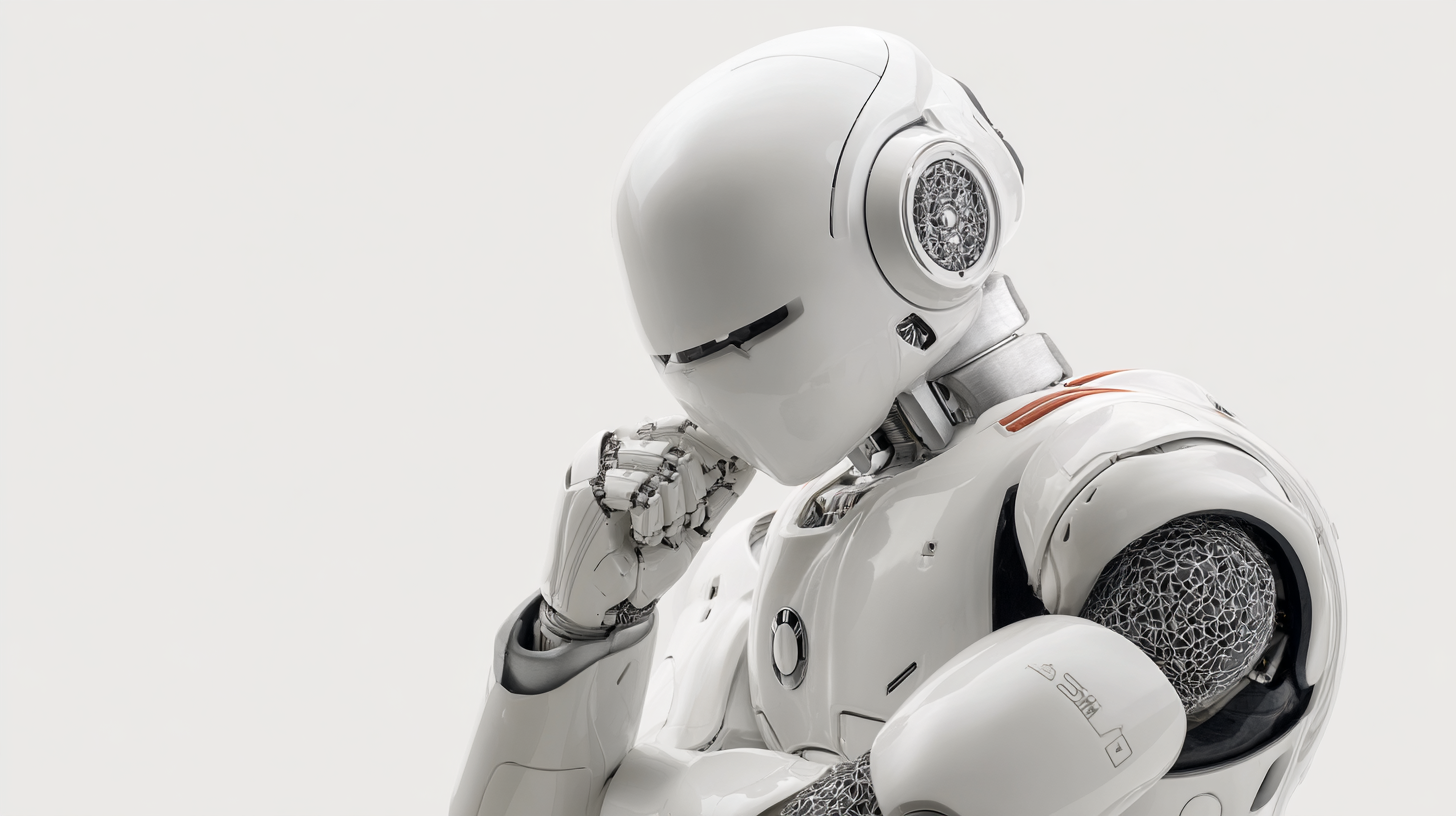
Figure 02 Humanoid Robot: BMW Partnership & Commercial Deployment
The Figure 02 is the first commercially deployed humanoid robot in automotive manufacturing, completing an 11-month pilot at BMW’s Spartanburg plant with 1,250+ operating hours and 90,000+ parts placed. Standing 168 cm tall with 16 degrees of freedom in its hands and 5-hour battery life, Figure 02 represents a leap from lab demos to real-world industrial deployment. At $130,000 (estimated), it’s not cheap—but it’s the only humanoid robot with proven automotive production credentials.
TL;DR — Key Takeaways
- Proven deployment: 11 months at BMW Spartanburg, 1,250 hours runtime, contributed to 30,000+ BMW X3 vehicles
- Technical specs: 168 cm tall, 70 kg, 25 kg payload, 5-hour battery, 6 RGB cameras, dual NVIDIA RTX GPUs
- AI system: Helix VLA (Vision-Language-Action) running onboard—no cloud dependency
- Precise work: 5mm placement tolerance in 2-second cycles, 99%+ accuracy target
- Price & availability: ~$130,000 estimated, enterprise/B2B only, not for individual consumers
Technical Specifications
| Specification | Figure 02 Details |
|---|---|
| Height | 168 cm (5’6″) |
| Weight | 70 kg (154 lbs) |
| Payload Capacity (Hands) | 25 kg (55 lbs) |
| Payload Capacity (General) | 20 kg (44 lbs) |
| Walking Speed | 1.2 m/s (4.3 km/h) |
| Total Degrees of Freedom | 28 (16 in hands alone) |
| Battery | 2.25 kWh lithium-ion (torso-integrated) |
| Runtime | 5 hours continuous active operation |
| Charging Time | ~1.5 hours (autonomous docking) |
| Compute | Dual NVIDIA RTX GPU modules (~3× Figure 01) |
| Cameras | 6 × RGB cameras |
| Sensors | IMU, gyroscope, force sensors, touchless human detection, microphones, speakers |
| AI System | Helix VLA (Vision-Language-Action model) |
| Connectivity | Wi-Fi, Ethernet, 5G |
| Launch Date | August 6, 2024 |
| Estimated Price | ~$130,000 USD (enterprise) |
BMW Partnership: Real-World Deployment Results
The Figure 02’s BMW deployment isn’t a prototype demo—it’s documented production work. Announced January 18, 2024, the partnership placed Figure 02 units at BMW Group Plant Spartanburg in South Carolina, the automaker’s largest U.S. facility with 11,000 employees.
What the Robot Actually Did
The task was sheet metal loading—a classic pick-and-place operation in automotive manufacturing. The robot picked sheet metal parts from racks or bins and placed them onto welding fixtures. Traditional six-axis industrial robots then welded and fed parts into the main production line.
Three KPIs defined success:
- Cycle time: Load parts within 37 seconds, complete full cycle in 84 seconds
- Placement accuracy: >99% success rate per shift with 5mm tolerance
- Interventions: Zero human pauses or resets per shift
The Numbers
- Duration: 11-month pilot program
- Shifts: 10 hours/day, Monday through Friday
- Total runtime: 1,250+ hours
- Parts placed: 90,000+ sheet metal components
- Vehicles produced: 30,000+ BMW X3 units
- Steps taken: ~1.2 million
Milan Nedeljković, BMW AG Board Member for Production, stated: “The successful initial deployment of humanoid robots at our BMW Group plant in Spartanburg proves that humanoid robots can function not only under controlled laboratory conditions, but also in an existing automotive manufacturing environment.”
Helix AI: The Brain Behind the Robot
Figure 02 originally launched with OpenAI partnership for speech-to-speech capabilities. In 2025, Figure AI ended that collaboration—founder Brett Adcock noted that large language models had become “getting smarter yet more commoditized” while high-rate robot control remained the real challenge.
Dual-System Architecture
Helix VLA (Vision-Language-Action) runs entirely onboard using dual NVIDIA RTX GPUs:
- System 2 (VLM): Scene understanding at 7-9 Hz for high-level planning
- System 1 (Visuomotor): Real-time motor control at 200 Hz
This architecture enables zero-shot manipulation—the robot can handle thousands of objects it has never seen before without retraining. All inference runs locally. No cloud latency. No internet dependency.
Design and Engineering Improvements
Figure 02 represents a ground-up redesign from Figure 01, addressing key limitations discovered during early testing. The engineering team focused on durability, thermal management, and integration.
Integrated Cabling
Unlike Figure 01 where cables were externally routed, Figure 02 features fully integrated cabling within the limbs. This prevents snags during locomotion and repetitive motions—a common failure point in earlier humanoid designs.
Thermal Management
The torso houses both the 2.25 kWh battery and dual GPU compute modules. This centralization optimizes weight distribution for balance while enabling efficient heat dissipation through the chassis. The matte black exterior reduces glare that could interfere with camera perception.
Human-Scale Design
At 168 cm and 70 kg, Figure 02 matches average human dimensions. This matters in environments designed for human workers—doorways, workstations, and tooling all fit without modification. The feet are designed to accommodate standard footwear patterns, enabling stable walking on industrial flooring.
Figure 02 vs Competitors: Comparison
| Feature | Figure 02 | Tesla Optimus Gen 2 | Unitree G1 | Agility Digit |
|---|---|---|---|---|
| Height | 168 cm | 168 cm | 127 cm | 175 cm |
| Weight | 70 kg | 57 kg | 35 kg | 65 kg |
| Payload | 25 kg | ~20 kg | ~5 kg | 16 kg |
| Battery Life | 5 hours | ~2-4 hours (est.) | ~2 hours | ~2-4 hours |
| Hand DOF | 16 | 11 | N/A (grippers) | Basic grippers |
| AI System | Helix VLA (onboard) | Tesla FSD-derived | Basic autonomy | Proprietary |
| Industrial Deployment | BMW (active, proven) | Tesla factories (limited) | Research/demo | Amazon warehouses |
| Price | ~$130,000 (est.) | ~$30,000 (target) | ~$13,500 | Not disclosed |
| Availability | Enterprise (US) | Not yet commercial | Available | Limited deployment |
Pros and Cons
Pros
- Proven in production: Only humanoid robot with documented automotive manufacturing deployment
- Best-in-class AI: Helix VLA enables zero-shot manipulation and autonomous operation
- Industry-leading battery: 5-hour runtime exceeds all competitors
- Hand dexterity: 16 DOF hands with 25 kg capacity outperform most alternatives
- Onboard compute: No cloud dependency means lower latency and better reliability
- Strong backing: $700M+ raised from Microsoft, NVIDIA, Intel Capital, Jeff Bezos
Cons
- High price: ~$130,000 estimated makes it expensive versus Tesla’s $30,000 target
- Limited availability: US-only, enterprise-only—no consumer pathway
- Walking speed: 1.2 m/s slower than Unitree G1 (2+ m/s) and Agility Digit (1.5 m/s)
- Succeeded by Figure 03: Next-generation model announced October 2025 may reduce long-term support
- No tactile sensors: Unlike Figure 03’s 3-gram fingertip sensors, Figure 02 relies on less precise force sensors
Future Outlook: Figure 03 and Beyond
Figure AI announced Figure 03 in October 2025—a complete redesign addressing Figure 02’s limitations. The new model features tactile fingertip sensors detecting forces as small as 3 grams, double the camera frame rate, 60% wider field of view, 9% less mass, soft safety materials, and wireless inductive charging.
What does this mean for Figure 02 buyers? Figure AI has stated that Figure 02 remains in active deployment while Figure 03 enters production. The company is retiring Figure 02 units from BMW as they transition to Figure 03, but the deployed fleet continues operating. For new buyers, Figure 03 represents the better long-term investment, though Figure 02 remains available for immediate deployment.
Figure AI’s ultimate goal is mass production at scale. Founder Brett Adcock has stated plans to manufacture 100,000 units within four years. The company opened BotQ, its own manufacturing facility, to produce thousands—eventually millions—of humanoid robots. This vertical integration strategy mirrors Tesla’s approach with Optimus.
Is Figure 02 Right for Your Business? Checklist
Before considering Figure 02 deployment, evaluate these factors:
- ☐ Task suitability: Do you have repetitive pick-and-place operations requiring 5mm precision?
- ☐ Shift length: Can tasks be structured within 5-hour blocks or allow charging cycles?
- ☐ Payload requirements: Do objects weigh under 25 kg?
- ☐ Budget: Can you justify ~$130,000+ per unit with expected ROI?
- ☐ Integration readiness: Do you have engineering resources for fleet deployment?
- ☐ Safety compliance: Can your facility meet OSHA human-robot collaboration standards?
If you checked 4+ items, humanoid robots merit serious evaluation. If fewer, consider traditional automation first.
FAQ
How much does Figure 02 cost?
Figure 02 is priced at approximately $130,000 USD (estimated) for commercial lease and enterprise units. Figure AI targets B2B customers with long-term deployment contracts rather than individual sales.
What is the battery life of Figure 02?
Figure 02 operates for up to 5 hours of continuous active use on a single charge. Its 2.25 kWh lithium-ion battery pack supports rapid charging in approximately 1.5 hours via autonomous docking.
What AI system does Figure 02 use?
Figure 02 runs Helix, a Vision-Language-Action (VLA) model developed in-house by Figure AI. Helix uses a dual-system architecture: System 2 (VLM at 7-9 Hz) for scene understanding and System 1 (visuomotor policy at 200 Hz) for real-time motor control.
Can Figure 02 work alongside humans safely?
Yes. Figure 02 is designed for human-robot collaboration with built-in safety sensors including force sensors, touchless human detection, and IMU/gyroscope systems. It was tested alongside human workers at BMW’s Spartanburg plant.
How does Figure 02 compare to Tesla Optimus?
Figure 02 focuses on advanced AI autonomy and dexterity with 16 DOF hands and the Helix VLA system, while Tesla Optimus targets mass-market affordability at around $30,000. Figure 02 is further along in real-world industrial deployment, while Optimus remains in limited testing.
What tasks can Figure 02 perform?
Figure 02 can perform manufacturing assembly tasks, package handling and logistics, grocery sorting, object manipulation, and collaborative tasks with other robots. Its 16 DOF hands can carry up to 25 kg.
Is Figure 02 available for purchase?
Figure 02 is available for commercial deployment through enterprise agreements with Figure AI. It is not sold directly to individual consumers.
Where has Figure 02 been deployed?
Figure 02 has been deployed at BMW Group’s Spartanburg, South Carolina manufacturing plant, where it performed sheet metal insertion tasks in chassis assembly. BMW is now expanding humanoid robot pilots to its Leipzig, Germany plant.
Bottom Line
The Figure 02 isn’t a concept—it’s a production-proven humanoid robot with documented results in automotive manufacturing. The BMW deployment data (1,250 hours, 90,000+ parts, 30,000+ vehicles) provides the real-world validation that competitors lack.
At ~$130,000, Figure 02 targets enterprise customers who can justify the investment through measurable productivity gains. The 5-hour battery life, 16-DOF hands, and onboard Helix AI make it the most capable commercially deployed humanoid robot available.
For manufacturers evaluating humanoid robots, Figure 02 offers proof of concept with real data. For everyone else, it signals that the humanoid robotics era has moved from lab to factory floor.
Want to explore more robotics options? Check our guides on the best humanoid robots and industrial automation strategies.
Affiliate Disclosure: This article may contain affiliate links. TheRoboWire may earn a commission at no extra cost to you.
