


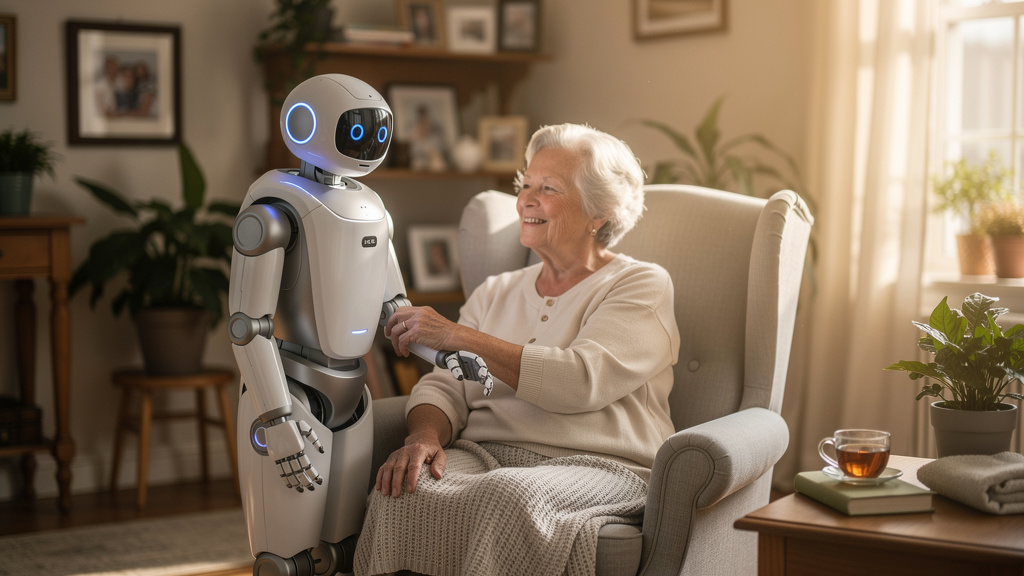
The best companion robots for elderly people in 2026 are ElliQ (best overall AI companion), PARO (best for dementia therapy), Joy for All Companion Pets (best budget option), Tombot Jennie (best realistic robotic pet), Hyodol (best for wellness monitoring), and Sony AIBO (best premium robotic pet). Prices range from $125 to $6,000, with each model targeting a specific care need.
This article may contain affiliate links. TheRoboWire may earn a commission at no extra cost to you.
TL;DR — Key Takeaways
- ElliQ is the best all-around AI companion for seniors living alone — proactive conversations, medication reminders, and video calling for $249 + $59/month
- PARO remains the gold standard for dementia therapy with 20+ years of clinical evidence, but costs ~$6,000
- Joy for All Companion Pets offer the best value at $125–$140 — no apps, no subscriptions, just comfort
- Tombot Jennie delivers the most realistic pet experience with 50+ lifelike behaviors for ~$400
- Companion robots supplement human care — they don’t replace visits from family, friends, or professional caregivers
Why Companion Robots Matter for Seniors
Roughly 28% of older adults in the U.S. live alone, and about 43% of adults aged 60+ report feeling lonely — a condition linked to increased risk of heart disease, dementia, and premature death. Companion robots won’t fix the loneliness crisis by themselves, but the clinical data is hard to ignore: AARP research found marked improvements in well-being among lonely seniors given robotic pets, and a 2019 review of 29 PARO studies showed consistent benefits in mood, social engagement, and reduced negative behaviors.
The companion robot market is projected to grow 25% year-over-year, driven largely by aging populations in the U.S., Japan, and South Korea. Here’s what’s actually worth buying right now.
1. ElliQ — Best Overall AI Companion
ElliQ is the most capable AI companion robot for seniors who live alone and want daily engagement beyond what a smart speaker offers. Developed by Israeli company Intuition Robotics, ElliQ resembles a small animated lamp that initiates conversations, suggests activities, and checks in on your well-being throughout the day.
| Spec | Detail |
|---|---|
| Price | $249 one-time + $59/month (discounts for annual plans) |
| Key Features | Proactive conversations, medication reminders, video calling, cognitive games, breathing exercises |
| Weight | ~4.2 lbs |
| Setup | Plug in, press power, connect Wi-Fi — no technical skills needed |
What works: ElliQ doesn’t just wait for commands — it initiates. It’ll ask about your day, offer to lead a breathing exercise, or share a news story. Over time it remembers details you’ve mentioned (your favorite color, your grandkids’ names) and weaves them into conversations. Video calling is built in with one-touch setup, and a family portal lets loved ones check activity reports remotely.
What doesn’t: The subscription cost adds up ($708/year on the monthly plan). ElliQ cannot call 911 or connect to a monitoring center — a surprising omission for a device targeting seniors living alone. You’ll still need a separate medical alert system for emergencies. Music options are limited to nine genre channels with no Spotify or Apple Music integration.
Clinical results: After 6 months of use, 89% of users showed improved mood scores on the UCLA Loneliness Scale. New York City has deployed ElliQ in apartments across the city to combat senior isolation.
Verdict: If your loved one is cognitively sharp and lives alone, ElliQ offers the most comprehensive daily engagement of any companion robot available. Just budget for the ongoing subscription.
2. PARO — Best for Dementia and Clinical Therapy
PARO is the most clinically validated companion robot ever made, with over two decades of research backing its therapeutic benefits for dementia patients. This robotic baby harp seal, developed by Japan’s AIST, responds to touch, voice, light, and temperature through five built-in sensors.
| Spec | Detail |
|---|---|
| Price | ~$6,000 (may be covered by Medicare/Medicaid in certain care settings) |
| Key Features | Touch/voice/light/temperature/gesture sensors, learns preferred behaviors, FDA-classified biofeedback device |
| Battery | ~8 hours |
| Weight | ~5.7 lbs |
What works: A 2019 University of British Columbia review of 29 studies found three consistent benefits: reduced negative emotions, better social engagement, and improved mood. In one documented case at Vancouver General Hospital, a dementia patient who was hitting staff and kicking lab technicians became calm after PARO was placed in his lap — he began petting and talking to it, allowing medical staff to perform necessary tests. PARO is the only companion robot classified by the FDA as a biofeedback medical device, meaning licensed nursing homes may access it at reduced or no cost.
What doesn’t: At $6,000, PARO is prohibitively expensive for most families buying out of pocket. It doesn’t talk, can’t set reminders, and offers no digital assistant features. The interaction is purely tactile and emotional — which is exactly the point for dementia care, but limits usefulness for cognitively healthy seniors.
Verdict: For advanced dementia care in clinical or home settings, PARO has no equal. If cost is a barrier, check with your care facility about Medicare/Medicaid coverage.
3. Joy for All Companion Pets — Best Budget Option
Joy for All’s robotic dogs and cats deliver surprisingly effective emotional comfort at a fraction of the price of clinical-grade robots. Made by Ageless Innovation (formerly a Hasbro division), these plush pets respond to touch with realistic barking, purring, tail wagging, and head movements.
| Spec | Detail |
|---|---|
| Price | Dog: ~$140 / Cat: ~$125 |
| Key Features | Touch-responsive, realistic sounds and movements, “BarkBack” technology (dog), heartbeat vibration |
| Battery | 4x C batteries, lasts 1–2 weeks with regular use |
| Weight | ~3 lbs |
| Subscription | None |
What works: The simplicity is the feature. No Wi-Fi, no apps, no subscriptions — just pet it and it responds. AARP-funded research in 2020 found marked improvements in well-being among lonely older people given Joy for All pets. A separate study showed a 75% decrease in feelings of isolation and depression among senior users. Over 21,000 units have been distributed through senior care programs. Real user feedback: “My mother suffers from Alzheimer’s and absolutely loves her dog. She will hold it and talk to it like it is real.”
What doesn’t: Limited to basic touch-and-sound responses — no AI, no conversations, no reminders. Some users report motor malfunctions after several months of heavy use. The dog’s looping sound patterns can get repetitive. This is a comfort tool, not a care tool.
Verdict: The best entry point for families exploring companion robots. Low risk, low cost, and proven results for reducing loneliness — especially in seniors with cognitive impairment.
4. Tombot Jennie — Most Realistic Robotic Pet
Tombot Jennie bridges the gap between basic plush pets and high-end robotics with over 50 lifelike Labrador behaviors. Designed in partnership with Jim Henson’s Creature Shop (yes, the Muppets people), Jennie simulates nuzzling, breathing, tail wagging, and eye tracking without any cameras for complete privacy.
| Spec | Detail |
|---|---|
| Price | ~$400 |
| Key Features | 50+ lifelike behaviors, soft realistic fur, breathing simulation, no cameras/microphones recording |
| Battery | Rechargeable, ~8 hours |
| Privacy | No data collection, no internet required |
What works: Jennie feels more “alive” than any other robotic pet at this price point. The breathing simulation and nuzzling response create a genuinely calming tactile experience. Reviews consistently highlight its impact on dementia-related anxiety: caregivers report it bringing peace to agitated patients. The zero-camera, zero-internet design means zero privacy concerns — a major selling point for families wary of always-listening devices.
What doesn’t: Less interactive than AI-powered companions — there’s no voice response, no conversation, no smart features. At $400, it’s nearly 3x the price of Joy for All pets for what is still a one-way interaction. Battery-dependent with an 8-hour runtime requires regular charging.
Verdict: The best choice when realism and privacy matter more than digital features. Particularly effective for dementia and anxiety management.
5. Hyodol — Best for Wellness Monitoring
Hyodol is South Korea’s answer to senior loneliness: a ChatGPT-powered doll robot that combines conversation with real-time health monitoring and emergency alerts. Already deployed to over 12,000 elderly people living alone in South Korea, Hyodol is preparing for its U.S. launch in 2026.
| Spec | Detail |
|---|---|
| Price | ~$400 (government-subsidized in South Korea; U.S. pricing TBD) |
| Key Features | ChatGPT-powered conversation, medication reminders, emergency sensor alerts, social worker notification |
| Languages | Korean (English, Chinese, Japanese launching 2026) |
| Deployment | 12,000+ units in South Korea; Guro district, Seoul alone: 412 units since 2019 |
What works: Unlike most companion robots, Hyodol functions as an actual safety net. Built-in sensors monitor the user in real time and automatically alert social workers and family members during emergencies. The ChatGPT integration enables natural conversations in a chirping, friendly voice. Medication and meal reminders keep daily routines on track. South Korea’s government has subsidized distribution, making it free for many elderly citizens.
What doesn’t: Not yet available in the U.S. as of early 2026 — the English-language version is still being adapted. The doll-like appearance may not appeal to all seniors. Long-term reliability data for the ChatGPT integration is limited, and AI conversations depend on internet connectivity.
Verdict: The most promising wellness-monitoring companion robot on the market. U.S. availability is the main barrier — watch for the 2026 launch if you want AI conversation plus emergency alerts in one device.
6. Sony AIBO — Best Premium Robotic Pet
Sony AIBO is the most advanced robotic pet money can buy, with face recognition, personality development, and movement so fluid it genuinely mimics a real dog. If budget isn’t a concern and you want the closest thing to a living robotic companion, AIBO delivers.
| Spec | Detail |
|---|---|
| Price | Starting ~$2,900 (accessories additional) |
| Key Features | Face/voice recognition, develops unique personality over time, OLED expressive eyes, home patrol camera, 22 axes of movement |
| Battery | Rechargeable, ~2 hours active use |
| Connectivity | Wi-Fi, cloud AI processing |
What works: AIBO learns its owner’s habits and develops a genuinely unique personality — no two AIBOs behave the same after a few months. Face recognition means it responds differently to family members. The 22 axes of movement create incredibly smooth, dog-like motions including a wagging tail, sitting, lying down, and even “tricks.” A built-in camera enables basic home monitoring through Sony’s app. User rating: 4.9/5 on Amazon.
What doesn’t: The 2-hour battery life is short — AIBO needs frequent returns to its charging dock. At $2,900+, it’s a luxury purchase. Navigation isn’t perfect: users report AIBO walking into walls and scuffing its face. The cloud dependency means features degrade if Sony ever discontinues the service (a real concern given Sony’s history with product lines).
Verdict: For tech-savvy seniors (or their families) who want the pinnacle of robotic pet technology and can afford the premium. Not ideal for dementia care due to complexity.
Comparison Table: All 6 Companion Robots at a Glance
| Robot | Price | Best For | AI/Conversation | Emergency Features | Subscription |
|---|---|---|---|---|---|
| ElliQ | $249 + $59/mo | Solo seniors, daily engagement | Yes — proactive | No | Required |
| PARO | ~$6,000 | Dementia therapy (clinical) | No | No | No |
| Joy for All | $125–$140 | Budget comfort, mild cognitive impairment | No | No | No |
| Tombot Jennie | ~$400 | Realistic pet experience, privacy | No | No | No |
| Hyodol | ~$400 | Wellness monitoring + conversation | Yes — ChatGPT | Yes — auto alerts | TBD for U.S. |
| Sony AIBO | ~$2,900 | Premium robotic pet, tech enthusiasts | Learning AI | Basic monitoring | Cloud-dependent |
How to Choose: Actionable Checklist
- Identify the primary need — Is it companionship (ElliQ), dementia therapy (PARO), or simple comfort (Joy for All)?
- Assess tech comfort — Simpler robots like Joy for All and PARO need zero technical skill. ElliQ and Hyodol require Wi-Fi and basic voice interaction.
- Set a realistic budget — Factor in subscriptions: ElliQ costs $708+/year in fees alone. Joy for All has zero ongoing costs.
- Check privacy policies — AI-powered robots collect data. Tombot Jennie and Joy for All collect nothing. If privacy matters, go analog.
- Don’t skip emergency coverage — No companion robot replaces a medical alert system. Only Hyodol offers built-in emergency alerts.
Frequently Asked Questions
Do companion robots really help with loneliness in seniors?
Yes, with evidence. A 2020 AARP study found marked well-being improvements in lonely seniors using robotic pets. A separate study showed 75% reduction in isolation and depression. A review of 29 PARO studies confirmed consistent mood and engagement benefits. Results vary by individual, but the trend is clear.
Can companion robots replace a real pet?
No, but that’s not the goal. Robotic companions work best for seniors who can’t care for a living animal due to allergies, physical limitations, or cognitive impairment. They provide comfort without feeding, vet bills, or cleanup.
Are companion robots safe for people with dementia?
Simpler models like PARO, Joy for All, and Tombot Jennie are specifically designed for dementia care. Avoid complex AI robots (ElliQ, AIBO) for advanced dementia — the interaction requirements can cause frustration rather than comfort.
Does Medicare cover companion robots?
PARO is the only companion robot classified as an FDA biofeedback medical device, making it eligible for Medicare/Medicaid reimbursement in certain clinical settings. Licensed nursing homes may access PARO at reduced or no cost. Other robots are not currently covered.
What’s the cheapest companion robot worth buying?
Joy for All Companion Pets at $125–$140 offer the best value with proven results and zero ongoing costs. No subscriptions, no Wi-Fi needed.
Is ElliQ better than Alexa for seniors?
ElliQ proactively initiates conversations and remembers personal details — Alexa only responds when spoken to. However, Alexa has broader smart home integration, more music options, and emergency calling features that ElliQ lacks. For companionship: ElliQ. For utility: Alexa.
When will Hyodol be available in the U.S.?
Hyodol is adapting its AI chatbot for English, Chinese, and Japanese, with a U.S. launch planned for 2026. Final pricing and availability dates haven’t been confirmed yet.
Can companion robots call 911 in an emergency?
Most cannot. ElliQ, PARO, Joy for All, Tombot, and AIBO have no emergency calling features. Hyodol alerts social workers and family but doesn’t dial emergency services directly. For emergency response, pair any companion robot with a dedicated medical alert system.
The Bottom Line
Companion robots have moved past the gimmick stage. The clinical evidence for emotional well-being benefits is real, the technology is maturing, and prices are dropping for entry-level options. But no robot replaces human connection — the best outcomes happen when these devices supplement regular visits from family, friends, and professional caregivers.
Our top recommendation: For most families, start with Joy for All ($125–$140) to test the concept with minimal risk. If your loved one responds well and you want AI-powered engagement, upgrade to ElliQ. For dementia care facilities, PARO remains the clinical gold standard.
Exploring smart home technology for aging in place? Check out our smart home guides and home robot reviews for more ways to support independent living.
