

This article may contain affiliate links. TheRoboWire may earn a commission at no extra cost to you.
So you’ve decided to get into drones. Great — but you’ve probably already hit the wall: do you want a racing drone that screams through gates at 100+ mph, or a photography drone that hovers smoothly and captures stunning 4K footage? The answer depends entirely on what you want from the sky, and the differences between these two drone types go way deeper than just speed vs. camera quality.
Here’s a complete breakdown of racing drones vs photography drones — real specs, real prices, and honest advice on which one actually makes sense for you in 2026.
TL;DR — Quick Verdict
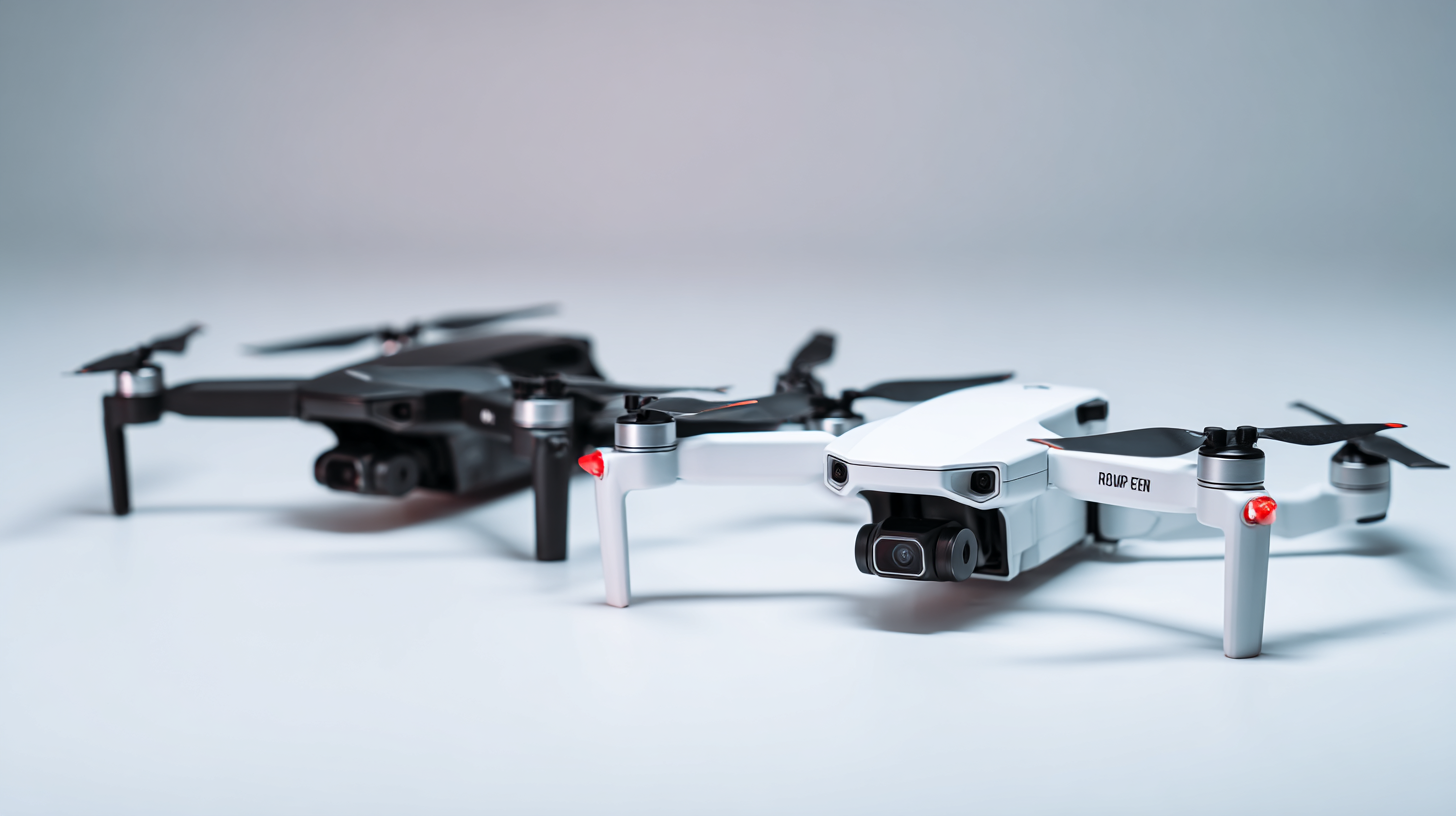
Choose a photography drone if you want stunning aerial photos and video, easy flying, long battery life, and a ready-to-fly experience. Choose a racing drone if you want adrenaline, immersive FPV flying, and you’re willing to invest serious practice time (and accept frequent crashes). Most beginners should start with a photography drone — the learning curve is dramatically easier.
What Are Racing Drones?
Racing drones — also called FPV (First Person View) drones — are built for one thing: speed and agility. Pilots wear goggles that stream a live video feed from the drone’s onboard camera, creating an immersive cockpit experience. It feels like you’re sitting inside the drone.
These machines use high-KV motors that deliver explosive throttle response, lightweight carbon fiber frames, and aggressive flight tuning. A typical 5-inch racing quad can hit speeds over 100 mph and change direction in the blink of an eye. The tradeoff? Flight times of just 3–8 minutes, manual controls with zero safety assists, and a learning curve that will have you crashing — a lot.
Popular racing drones in 2026 include:
- BetaFPV Cetus Pro Kit (~$149–$199) — Best beginner learning tool with complete RTF package
- DJI Avata 2 (~$789–$999) — FPV racing with obstacle avoidance and beginner-friendly modes
- GEPRC CineLog25 (~$289 BNF) — Cinematic FPV with smooth stabilized footage
- Custom 5″ racing builds (iFlight, SpeedyBee) — $300–$600+ for the frame and electronics alone
What Are Photography Drones?
Photography drones (camera drones) are designed for aerial imaging. They feature high-resolution cameras mounted on mechanical gimbals for buttery-smooth stabilization, GPS-assisted hover, omnidirectional obstacle avoidance, and intelligent flight modes that let the drone fly itself while you focus on composition.
Modern camera drones shoot 4K–8K video, capture 48+ megapixel photos, and can stay airborne for 30–46 minutes per charge. They’re built for anyone who wants professional-quality aerial content without needing pilot skills honed over hundreds of hours.
Top photography drones for 2026:
- DJI Mini 4 Pro (~$759) — Under 250g, omnidirectional obstacle avoidance, 4K/60fps, 34 min flight time
- DJI Air 3S (~$1,099–$1,599) — Dual cameras (wide + 70mm telephoto), LiDAR, 45 min flight time
- DJI Mavic 3 Pro (~$2,199) — Triple camera system with Hasselblad, Four Thirds sensor, 43 min flight
- DJI Flip (~$439) — Budget-friendly, enclosed props, same sensor as Mini 4 Pro
- Autel EVO Lite+ — Strong DJI alternative with excellent camera quality
Racing Drones vs Photography Drones: Head-to-Head Comparison
| Feature | Racing Drones | Photography Drones |
|---|---|---|
| Top Speed | 60–120+ mph | 25–45 mph |
| Flight Time | 3–8 min (racing), 15–27 min (cinewhoop) | 25–46 minutes |
| Camera Quality | Low-latency VGA–1080p FPV feed; GoPro mount optional | 4K–8K stabilized gimbal, 1-inch to Four Thirds sensor |
| Stabilization | None (manual acro mode) or basic EIS | 3-axis mechanical gimbal + GPS hover |
| Obstacle Avoidance | None on most racing quads | Omnidirectional sensors + LiDAR |
| Pilot View | Immersive FPV goggles | Controller screen or phone |
| Learning Curve | Very steep — 50–100+ hours to fly competently | Easy — 2–4 hours with simulator practice |
| Total Cost to Start | $325 (RTF trainer) to $1,200+ (proper racing setup) | $380–$1,600 (ready to fly out of the box) |
| Crash Risk | Extremely high — crashes are part of learning | Low — obstacle avoidance prevents most crashes |
| Best For | Racing, freestyle tricks, immersive FPV experience | Aerial photography, videography, real estate, travel |
Design and Build: Engineered for Different Missions
The physical design of these drones reveals their priorities immediately. Racing drones use an H-pattern motor configuration that thrusts the drone forward, not just up. They run 3-blade or 4-blade props for higher acceleration on a smaller frame, and every gram is scrutinized — lighter means faster. Frames are typically 3K carbon fiber, built to survive hard impacts (because they will happen).
Photography drones use an X-pattern motor layout optimized for stable hover. They carry relatively heavy payloads — gimbal systems, high-res cameras, large batteries — and prioritize wind resistance and smooth flight over raw speed. The latest professional camera drones feature sensors from 1/1.3-inch to full Four Thirds size, delivering image quality that rivals ground-level mirrorless cameras.
Camera Systems: Latency vs. Quality
This is where the two categories couldn’t be more different.
Racing Drone Cameras
Racing drones prioritize low latency — the time between what happens in front of the drone and what the pilot sees in their goggles. Even a 20-millisecond delay at 100 mph means you’ve traveled nearly 3 feet blind. Racing cameras are small, lightweight, and optimized for real-time clarity rather than recording quality. Many competitive racers strap on a separate GoPro or action camera for recording, while flying via the dedicated low-latency FPV feed.
Digital FPV systems like DJI’s O3 and O4 have narrowed the gap significantly, offering HD goggles views with acceptable latency. But for serious racing, some pilots still prefer analog systems for their near-zero delay.
Photography Drone Cameras
Camera drones are all about image quality. The latest models from DJI, Autel, and Skydio feature 1-inch or larger sensors, mechanical gimbals that stabilize footage across three axes, and support for 4K/120fps slow motion, 10-bit color, and RAW photography. The gimbal compensates for wind and control inputs, delivering cinema-quality footage even in gusty conditions.
Flight Experience: Adrenaline vs. Zen
Flying a racing drone is like driving a Formula 1 car — thrilling, demanding, and unforgiving. You’re in full manual control (acro/rate mode), with no self-leveling, no GPS hold, no emergency brake. When you let go of the sticks, the drone doesn’t stop — it keeps going. One wrong input and you’re picking up pieces.
Flying a photography drone is more like piloting a luxury sedan with autopilot. GPS holds your position, obstacle sensors prevent collisions, and intelligent flight modes like ActiveTrack, QuickShots, and Waypoints handle complex maneuvers automatically. You can focus entirely on framing the perfect shot.
For context: most FPV pilots crash 200+ times during their first few months of learning (that’s normal). Photography drone pilots with obstacle avoidance might never crash at all.
Cost Breakdown: What You’ll Actually Spend
Racing Drone Budget
- Starter trainer kit (BetaFPV Cetus Pro): ~$199 + extra batteries ($75) + charger ($50) = ~$325
- Proper racing setup (BNF quad + goggles + controller): Drone ~$289, goggles ~$400, radio ~$200, batteries ~$200, charger ~$80 = ~$1,170
- DJI Avata 2 (beginner-friendly FPV): Fly Smart Combo = ~$789–$999
- Ongoing costs: Broken props, motors, frames from crashes — budget $50–$200/year minimum
Photography Drone Budget
- Budget entry (DJI Flip or Mini 3): ~$380–$439 + extra batteries (~$100) + ND filters (~$40) = ~$550–$600
- Best value (DJI Mini 4 Pro Fly More Combo): ~$999–$1,199
- Premium (DJI Air 3S Fly More Combo): ~$1,599
- Ongoing costs: Minimal — these drones rarely crash. Mostly ND filters and memory cards.
Who Should Choose a Racing Drone?
A racing drone is right for you if:
- You want the adrenaline rush of immersive FPV flying
- You’re interested in competitive drone racing (the Drone Racing League is growing fast)
- You enjoy building and tinkering — custom builds are a huge part of the hobby
- You want to create dynamic cinematic FPV footage (the kind you see in Red Bull videos)
- You’re willing to invest 50–100+ hours of simulator practice before flying well
- You have a high tolerance for crashing and repair costs
Who Should Choose a Photography Drone?
A photography drone is right for you if:
- You want stunning aerial photos and video for travel, real estate, or social media
- You prefer a ready-to-fly experience with minimal setup
- You value long flight times (30–46 minutes vs. 3–8 minutes)
- You want obstacle avoidance and safety features that prevent crashes
- You need automated flight modes for complex shots
- You don’t want to spend months learning to fly before getting usable results
- You’re interested in commercial drone work (real estate, events, mapping)
Can You Get Both in One Drone?
Kind of. The DJI Avata 2 (and the upcoming Avata 360) bridges the gap between FPV and traditional drones. It offers immersive FPV goggles flying with obstacle avoidance in Normal mode, then switches to full manual acro mode when you’re ready. It shoots 4K/60fps — not professional-grade, but solid for social media and personal use. It’s the closest thing to a hybrid, though purists on both sides will tell you it compromises too much in either direction.
For most people, though? The Avata 2 at ~$789 is genuinely the best way to experience FPV without the typical $2,000+ in crash damage that manual racing drones inflict on beginners.
FAQ
Are racing drones harder to fly than photography drones?
Significantly harder. Racing drones use manual (acro) mode with no stabilization assists. Most pilots need 50–100+ hours of practice, including simulator time, before flying competently. Photography drones with GPS and obstacle avoidance can be flown reasonably well after just 2–4 hours of practice.
Can I use a racing drone for photography?
You can mount a GoPro or action camera on many racing and cinematic FPV drones, and the footage can be spectacular — smooth dive shots, proximity flying, and dynamic angles that camera drones simply can’t achieve. However, the footage requires more post-processing, flight times are much shorter, and you need significant piloting skill to pull it off.
Do I need an FAA license to fly either type?
In the US, any drone over 250g (0.55 lbs) requires FAA registration ($5 for 3 years). Recreational pilots must pass the TRUST safety test. If you’re flying commercially (for paid work), you need an FAA Part 107 certification regardless of drone weight. Many photography drones like the DJI Mini series weigh under 250g, avoiding the registration requirement.
Bottom Line
Racing drones and photography drones serve fundamentally different purposes. Racing drones are about the experience of flying — speed, immersion, skill mastery. Photography drones are about the results of flying — beautiful images, smooth video, effortless content creation.
If you’re brand new to drones, start with a photography drone. Seriously. The learning curve is gentle, the results are immediate, and modern obstacle avoidance means your investment is protected. Once you’ve caught the drone bug and want more excitement, look into FPV with a trainer kit like the BetaFPV Cetus Pro or the DJI Avata 2.
The sky’s big enough for both. You just need to decide what you want to do up there.
Looking for more drone comparisons? Check out our DJI vs Autel vs Skydio brand comparison and our deep dive into professional camera drones with 4K & 8K video. For the latest on smart home technology, browse our complete guide to home robots in 2026.
