


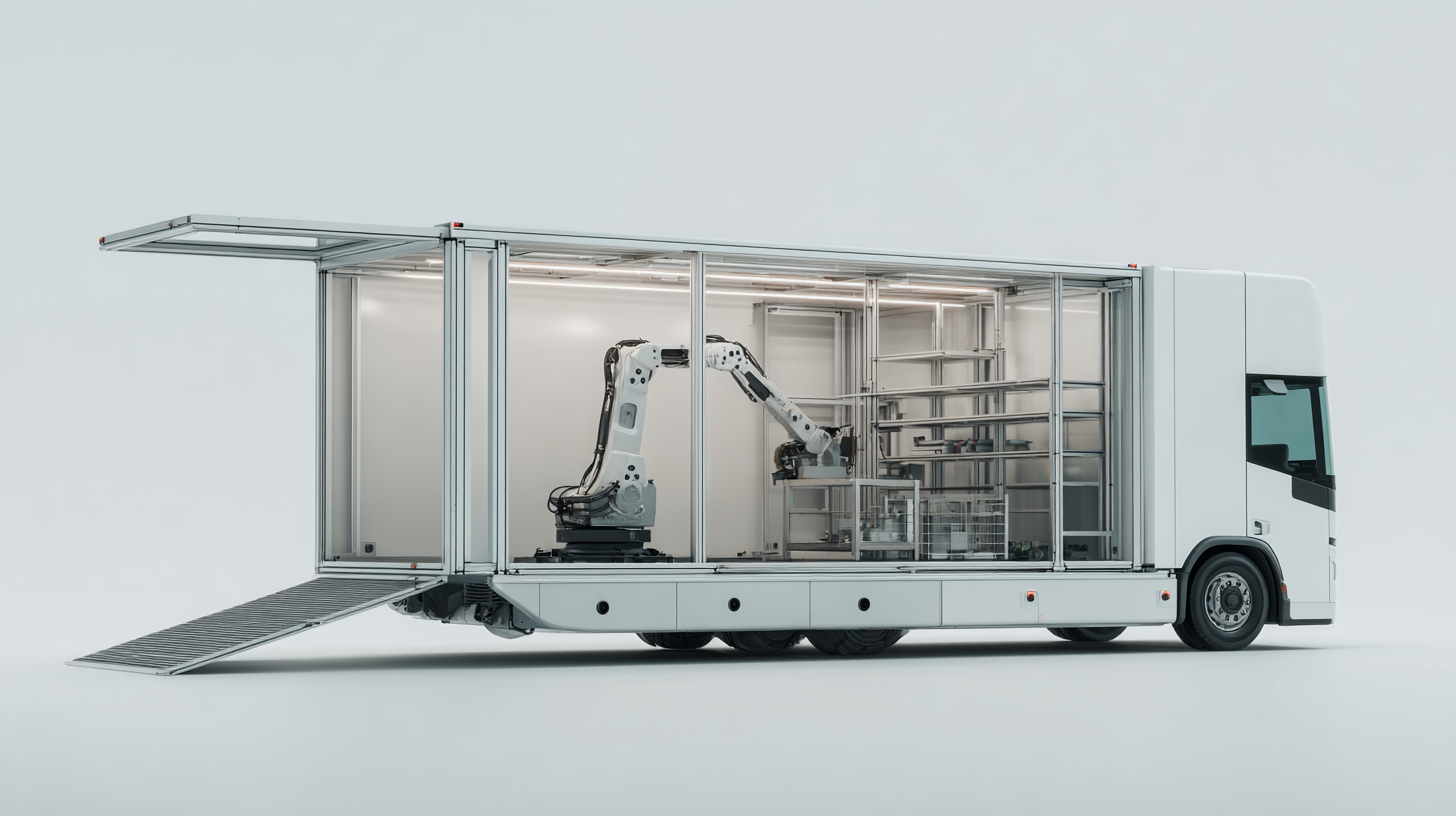
Dexterity just unveiled Foresight, a world model that lets robots reason about physics in real time — and it’s already running in production, loading trucks at some of the world’s largest logistics companies.
If you’ve been following industrial robotics, you know the big promise: robots that don’t just follow scripts, but actually understand the physical world around them. Dexterity’s Foresight world model is a concrete step in that direction — a physics-consistent AI system that enables robots to perceive, reason, and act in complex, unpredictable environments like the inside of a shipping truck.
What Is Foresight, Exactly?
Foresight is Dexterity’s physics-consistent world model — a real-time, transactable representation of the physical environment. Unlike traditional robot programming where every movement is scripted, Foresight enables robots to understand the physical consequences of their actions before they make them.
In autonomous truck loading, Foresight powers Dexterity’s dual-armed robot called Mech. At its core is a 4D box packing agent that reasons across three spatial dimensions plus time. The system determines where to place each package onto an evolving wall of freight, predicting how every placement will affect the stability and integrity of the entire truck load.
The numbers behind this are staggering. For each box, the system evaluates up to 400 potential placements while simultaneously packing multiple walls. Foresight makes each placement decision in under 400 milliseconds, jointly optimizing for:
- Density — maximizing space utilization
- Stability — ensuring the load won’t shift or collapse
- Reachability — keeping future placements accessible
- Dual-arm parallelism — coordinating two arms working simultaneously
Dexterity says this combinatorial problem is “far more complex than the game of Go” — with near-infinite input variation since every box is different in size, weight, and orientation.
Why World Models Matter for Industrial Robots
Traditional industrial automation works great when every item is the same size, arrives at the same angle, and goes to the same place. The real world of logistics isn’t like that. Boxes come in wildly different sizes, they’re randomly oriented on conveyor belts, and the space available changes with every placement.
World models like Foresight represent a fundamental shift: instead of programming robots for specific scenarios, you give them an understanding of physics and let them figure out the best approach. This is what the industry means by “Physical AI” — robots that reason about the world rather than just execute commands.
“Foresight delivers real-time, production-grade random box packing in 4D space-time, predicting how one placement dictates the integrity of the entire truck,” said Samir Menon, Founder and CEO of Dexterity. “Physical AI is not just a future promise — it is a system that perceives, decides, and acts in the real world, right now.”
Already in Production — Not a Demo
Here’s what separates Dexterity from the usual AI announcements: Foresight isn’t a research project or a demo. The company emphasizes it’s running “full shifts at the world’s largest logistics companies — making millions of autonomous decisions with zero safety incidents.”
Key production stats:
- Training data: Over 100 million autonomous actions in production
- Applications: Six different use cases deployed
- Hardware: Runs on four robot types and five hand types
- Safety: Zero safety incidents reported
The system’s architecture is described as “interpretable and safety-first,” meaning operators can see why the system makes each decision. In an industry where a falling box wall can injure workers, that transparency isn’t just nice to have — it’s essential.
The Mech Robot: Dexterity’s Hardware Platform
Foresight runs on Dexterity’s Mech robot — a dual-armed mobile manipulator the company describes as “superhumanoid.” Mech uses machine vision and force sensing to handle everything from stiff cardboard boxes to flexible poly bags. The dual-arm design allows parallel operations, significantly increasing throughput compared to single-arm systems.
Dexterity launched Mech in 2025 specifically for truck loading and unloading — one of the most physically demanding and hardest-to-staff jobs in warehouse logistics. The combination of Mech’s hardware and Foresight’s intelligence creates a system that can handle the unpredictability that has kept this task largely manual.
The Foresight API Challenge: $50K in Prizes
In an interesting move, Dexterity is opening up access to Foresight through an API Challenge launching in March 2026. Student teams can build their own packing agents and compete on a public leaderboard for up to $50,000 in prizes.
The catch? No simulator is provided. Competitors must build their own understanding of the physics. There’s also a browser-based truck loading game at dexterity.ai/play that lets anyone experience the problem firsthand.
This is a smart talent pipeline play — get the next generation of roboticists thinking about production-grade physical AI problems while also crowdsourcing novel approaches to the packing problem.
Why This Matters for the Industry
The logistics industry has been automating warehouses for years, but truck loading has remained stubbornly manual. It’s physically demanding work with high injury rates and chronic staffing shortages. According to industry data, warehouse and logistics roles consistently rank among the hardest positions to fill.
Foresight represents the kind of AI breakthrough needed to automate these remaining manual bottlenecks — not by replacing human judgment with rigid scripts, but by building systems that can reason about the physical world with the flexibility that the task demands.
For companies watching the Physical AI space, Dexterity’s announcement is significant: it’s production-grade world model technology, deployed at scale, with a hardware-agnostic architecture that could extend well beyond truck loading.
The Bottom Line
Dexterity’s Foresight world model is the kind of advancement that moves industrial robotics from “automation” to “autonomy.” A robot that can evaluate 400 placement options in under 400 milliseconds, predict the physics consequences of each choice, and do it millions of times without a safety incident — that’s not incremental progress. That’s a new category of capability, and it’s already running in production.
Source: The Robot Report | Robotics Tomorrow
