


This article may contain affiliate links. TheRoboWire may earn a commission at no extra cost to you.
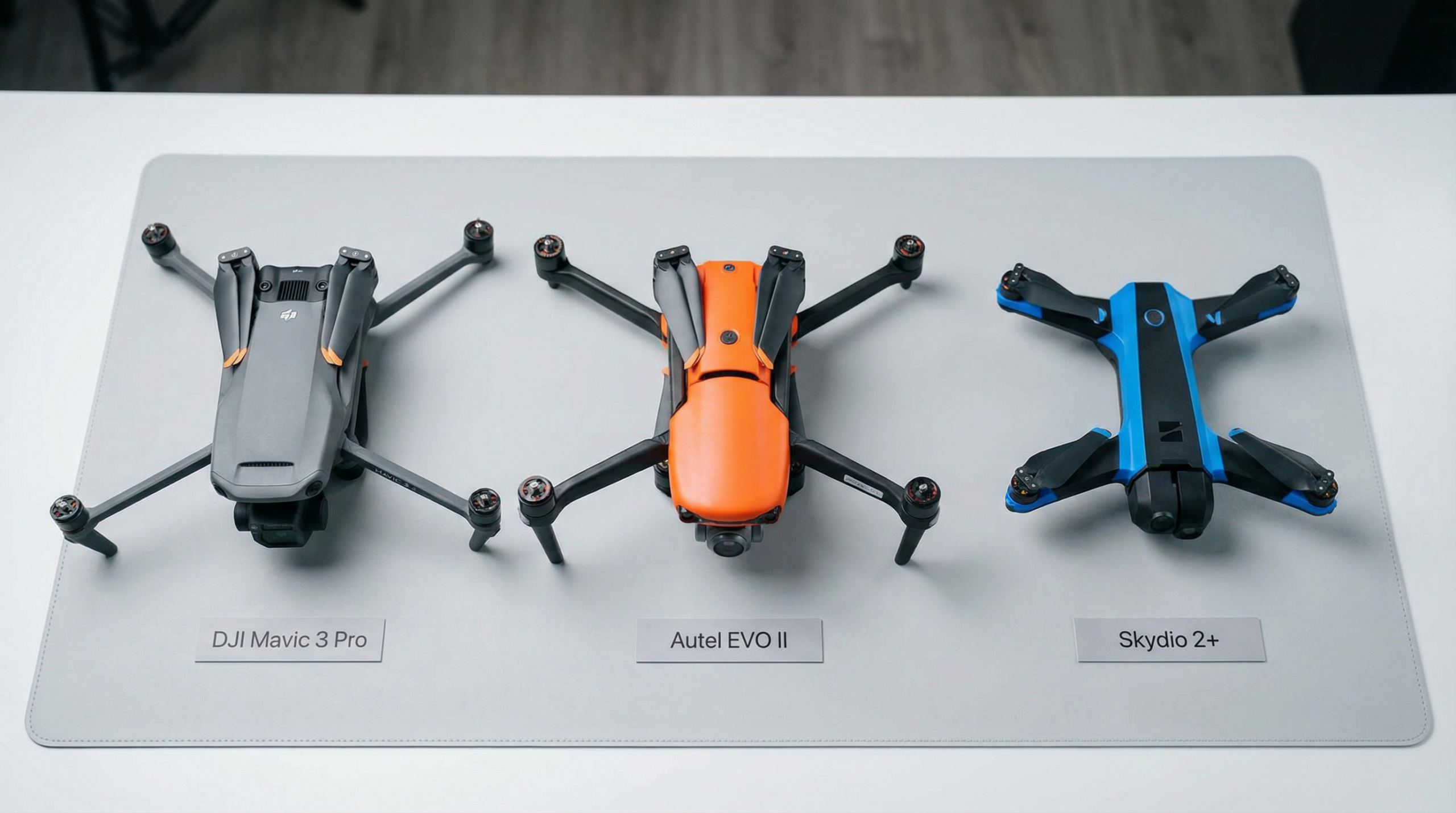
Choosing a drone brand in 2026 isn’t what it used to be. DJI still dominates the consumer market, Autel is pivoting hard toward enterprise, and Skydio? They left the consumer game entirely back in 2023. If you’re comparing DJI vs Autel vs Skydio drone brands, the landscape has shifted dramatically — and understanding where each brand stands today will save you from buying into a dead-end ecosystem.
Here’s the honest breakdown of all three brands, what they do best, and which one deserves your money right now.
TL;DR — Quick Verdict
- Best for most people: DJI — unmatched consumer lineup, best camera quality, largest accessory ecosystem
- Best DJI alternative (prosumer/commercial): Autel — fewer restrictions, solid cameras, strong enterprise pivot
- Best autonomous flight (enterprise only): Skydio — AI-powered autonomy leader, but no consumer drones anymore
- US buyers note: DJI faces an FCC import ban since December 2025 — existing models are still legal to fly and buy from stock, but no new models will be authorized
DJI: The Undisputed Consumer King
There’s a reason DJI commands roughly 70-75% of the global consumer drone market. Their ecosystem is massive, the cameras are class-leading, and the software polish is years ahead of the competition.
Current DJI Lineup (2026)
| Model | Sensor | Video | Weight | Flight Time | Price (USD) |
|---|---|---|---|---|---|
| DJI Mini 4 Pro | 1/1.3″ CMOS, 48MP | 4K/60fps HDR | 249g | 34 min | ~$759 |
| DJI Air 3S | 1″ CMOS, 50MP (wide) + medium tele | 4K/120fps | 720g | 46 min | ~$1,099 |
| DJI Mavic 4 Pro | 4/3 CMOS, 50MP + triple camera | 4K/120fps, 20-bit D-Log M | ~900g | 46 min | ~$2,199 |
| DJI Flip | 1/1.3″ CMOS, 48MP | 4K/60fps HDR | 249g | 31 min | ~$439 |
DJI Strengths
- Camera quality: Consistently the best image processing and color science in consumer drones. The Mavic 4 Pro with its Hasselblad-tuned triple camera system is genuinely professional-grade.
- Software ecosystem: DJI Fly app is polished, ActiveTrack 6.0 works reliably, and intelligent flight modes (Hyperlapse, MasterShots, Waypoints) are refined.
- Obstacle avoidance: Omnidirectional sensing with APAS 6.0 — the most reliable collision avoidance in any consumer drone.
- Accessory ecosystem: Third-party filters, cases, landing pads, chargers — the aftermarket is enormous.
- Resale value: DJI drones hold value better than any competitor.
DJI Weaknesses
- US FCC ban: As of December 23, 2025, the FCC barred DJI from receiving new equipment authorizations in the US. Existing models remain legal to fly and buy from existing stock, and software updates are permitted until January 1, 2027. But no new DJI models will hit the US market going forward.
- Data privacy concerns: Despite DJI’s Local Data Mode, the Chinese ownership continues to generate government scrutiny. For hobbyists this is largely a non-issue; for government or enterprise use, it’s a dealbreaker.
- Geofencing restrictions: DJI’s built-in geofencing is more aggressive than competitors — sometimes annoyingly so near airports and restricted areas.
- Price creep: The Mavic 4 Pro at $2,199 (drone only) puts it firmly in prosumer territory. Fly More combos push above $3,000.
Autel: The Strongest Alternative — But Shifting Focus
Autel Robotics has long been DJI’s most direct rival. Their drones offer excellent camera specs, fewer software restrictions, and genuinely competitive performance. However, Autel’s strategy has shifted significantly toward commercial and enterprise drones, with their consumer lineup receiving less attention.
Current Autel Lineup (2026)
| Model | Sensor | Video | Weight | Flight Time | Price (USD) |
|---|---|---|---|---|---|
| EVO Lite+ | 1″ CMOS, 20MP | 5.4K/30fps, 4K/60fps | 835g | 40 min | ~$1,149 |
| EVO II Pro V3 | 1″ CMOS, 20MP | 6K/30fps, 4K/60fps | 1,195g | 42 min | ~$1,799 |
| EVO II V3 (8K) | 1/2″ CMOS, 48MP | 8K/25fps, 4K/60fps | 1,195g | 42 min | ~$1,599 |
| EVO Max 4T V2 (Enterprise) | Multi-sensor (wide + zoom + thermal + laser) | 4K | 1,400g | 42 min | ~$8,000+ |
Autel Strengths
- No geofencing: Autel doesn’t enforce geofencing out of the box, which experienced pilots appreciate. You’re responsible for knowing the rules.
- Raw specs on paper: 6K and 8K video, long flight times, omnidirectional obstacle avoidance with 15km transmission range on V3 models.
- US-friendly: Autel has a significant US presence (headquarters in Bothell, WA) and isn’t affected by the DJI FCC ban.
- Enterprise innovation: The EVO Max 4T V2 and Alpha ($19,289) are genuinely impressive enterprise platforms with interchangeable payloads, A-Mesh multi-drone coordination, and triple anti-interference tech.
- Open SDK: More flexibility for commercial integrations and custom software development.
Autel Weaknesses
- Image processing gap: Despite impressive sensor specs, Autel’s image processing and stabilization are noticeably less polished than DJI. Colors, dynamic range, and low-light performance fall slightly behind.
- Consumer neglect: The EVO Lite and EVO II consumer lines haven’t seen major updates recently. Autel’s R&D focus has clearly shifted to enterprise.
- Smaller ecosystem: Fewer third-party accessories, smaller user community, less tutorial content online.
- App experience: Autel Sky app is functional but less intuitive than DJI Fly. Some users report occasional connectivity hiccups.
- Heavier drones: The EVO II series at ~1.2kg requires registration and is less travel-friendly than DJI’s sub-250g Mini series.
Skydio: Autonomy Champion — Enterprise Only
Here’s the big update many people miss: Skydio exited the consumer drone market in August 2023. The Skydio 2+ is discontinued for consumers. If you’re a hobbyist or content creator, Skydio is no longer an option.
That said, Skydio remains incredibly relevant in the enterprise and government sector, especially for US-based operations. Their AI-powered autonomous flight is genuinely best-in-class.
Why Skydio Still Matters
- AI autonomy: Skydio’s visual AI can navigate complex environments — through trees, under bridges, around structures — without GPS. No other brand comes close to this level of autonomous navigation.
- Made in USA: This is Skydio’s trump card. With the DJI ban and increasing government requirements for domestic drones (Blue UAS Cleared List), Skydio is perfectly positioned.
- Skydio X10: Their current enterprise flagship offers 65-minute flight time, interchangeable payloads, and fully autonomous inspection capabilities. It can be remotely deployed from dock stations without any pilot on site.
- 3D Scan: Automated 3D modeling and inspection workflows that genuinely work — used by utility companies, construction firms, and public safety agencies.
Why Skydio Doesn’t Work for Consumers
- No consumer products: Period. The Skydio 2+ consumer kits are discontinued and no replacement is planned.
- Enterprise pricing: The X10 starts well above $10,000. Skydio’s products are designed for organizations, not individuals.
- Camera quality: Optimized for inspection data, not cinematic content creation. You won’t be shooting travel vlogs with a Skydio.
DJI vs Autel vs Skydio: Head-to-Head Comparison
| Category | DJI | Autel | Skydio |
|---|---|---|---|
| Consumer drones | ✅ Best lineup | ⚠️ Limited updates | ❌ None |
| Camera quality | ⭐⭐⭐⭐⭐ | ⭐⭐⭐⭐ | ⭐⭐⭐ (inspection-focused) |
| Autonomous flight | ⭐⭐⭐⭐ | ⭐⭐⭐ | ⭐⭐⭐⭐⭐ |
| Obstacle avoidance | ⭐⭐⭐⭐⭐ | ⭐⭐⭐⭐ | ⭐⭐⭐⭐⭐ |
| US availability (2026) | ⚠️ FCC ban on new models | ✅ No restrictions | ✅ Made in USA |
| Software/app | ⭐⭐⭐⭐⭐ | ⭐⭐⭐ | ⭐⭐⭐⭐ |
| Enterprise/commercial | ⭐⭐⭐⭐⭐ | ⭐⭐⭐⭐ | ⭐⭐⭐⭐⭐ |
| Price range | $439 – $2,199+ | $1,149 – $19,000+ | $10,000+ |
| Accessory ecosystem | Massive | Growing | Limited |
| Data privacy | ⚠️ Chinese-owned | ✅ US headquarters | ✅ US-made |
Which Brand Should You Choose?
Choose DJI If…
- You want the best camera quality and most polished flying experience
- You’re outside the US, or you’re okay buying from existing US stock
- Content creation and photography are your priority
- You want the largest support community and accessory ecosystem
- Budget options matter (Mini 4 Pro and Flip are excellent value)
For a full rundown of the best DJI options and alternatives, check out our Best Drones 2026 buyer’s guide.
Choose Autel If…
- You’re a US pilot concerned about the DJI ban and want a future-proof ecosystem
- No geofencing is important to you
- You need raw specs (6K/8K video, long flight times) and don’t mind slightly less polished software
- Commercial or enterprise work is part of your plan
- You value supporting a brand with US-based operations
Choose Skydio If…
- You’re an enterprise, government, or public safety organization
- Autonomous operations and AI-powered inspections are your primary use case
- US-made, Blue UAS compliance is required
- You need dock-based remote deployment without on-site pilots
- Not if you’re a consumer or hobbyist — Skydio doesn’t make products for you anymore
The DJI US Ban: What It Actually Means
Since December 23, 2025, the FCC has blocked DJI from receiving new equipment authorizations in the United States. Here’s what that means in practice:
- Existing DJI drones are still legal to fly. The FAA has not banned DJI drone operations in US airspace.
- You can still buy existing models from retailers with stock. The Mini 4 Pro, Air 3S, and Mavic 4 Pro are all still available through dealers.
- Software updates are permitted through January 1, 2027.
- No new DJI models will receive FCC authorization, meaning future DJI releases won’t be legally sold in the US.
This makes Autel the primary beneficiary in the US consumer market, while Skydio dominates the government and defense segments. Outside the US, DJI remains the clear market leader.
For more on flying legally, see our drone laws and regulations 2026 guide.
FAQ
Is Autel as good as DJI for photography and video?
Close, but not quite. Autel’s specs look impressive on paper (6K, 8K), but DJI’s image processing, color science, and stabilization algorithms are more refined. If cinematic quality is your top priority, DJI still wins. If you want competitive quality with fewer restrictions, Autel is a solid choice.
Can I still buy and fly DJI drones in the US?
Yes. Existing models are still legal to purchase (from remaining stock) and fly. The FCC ban only blocks new model authorizations. Software updates for current models are allowed through January 1, 2027.
Why did Skydio stop making consumer drones?
Skydio exited the consumer market in August 2023 to focus entirely on enterprise, government, and defense customers. The profit margins and growth potential in those sectors far exceed the consumer market, especially with the DJI ban creating demand for US-made alternatives in government fleets.
Bottom Line
The drone brand comparison in 2026 isn’t the three-way race it used to be. DJI remains the best choice for consumers and content creators — their cameras, software, and ecosystem are unmatched. Autel is the strongest alternative, especially for US buyers worried about the DJI ban, though their consumer lineup needs a refresh. Skydio has carved out a dominant position in enterprise autonomy, but if you’re not an organization with a five-figure budget, they’re not for you.
For most drone buyers worldwide, DJI is still the brand to beat. The FCC ban complicates things for US buyers, but with existing stock still widely available, you have time to make your choice. If you want to future-proof your investment in the US market, Autel’s EVO II Pro V3 is the safest bet.
Ready to pick your drone? Browse our complete 2026 drone buyer’s guide for detailed reviews of every model mentioned above, or check out our drone photography tips to make the most of whatever you choose.
