


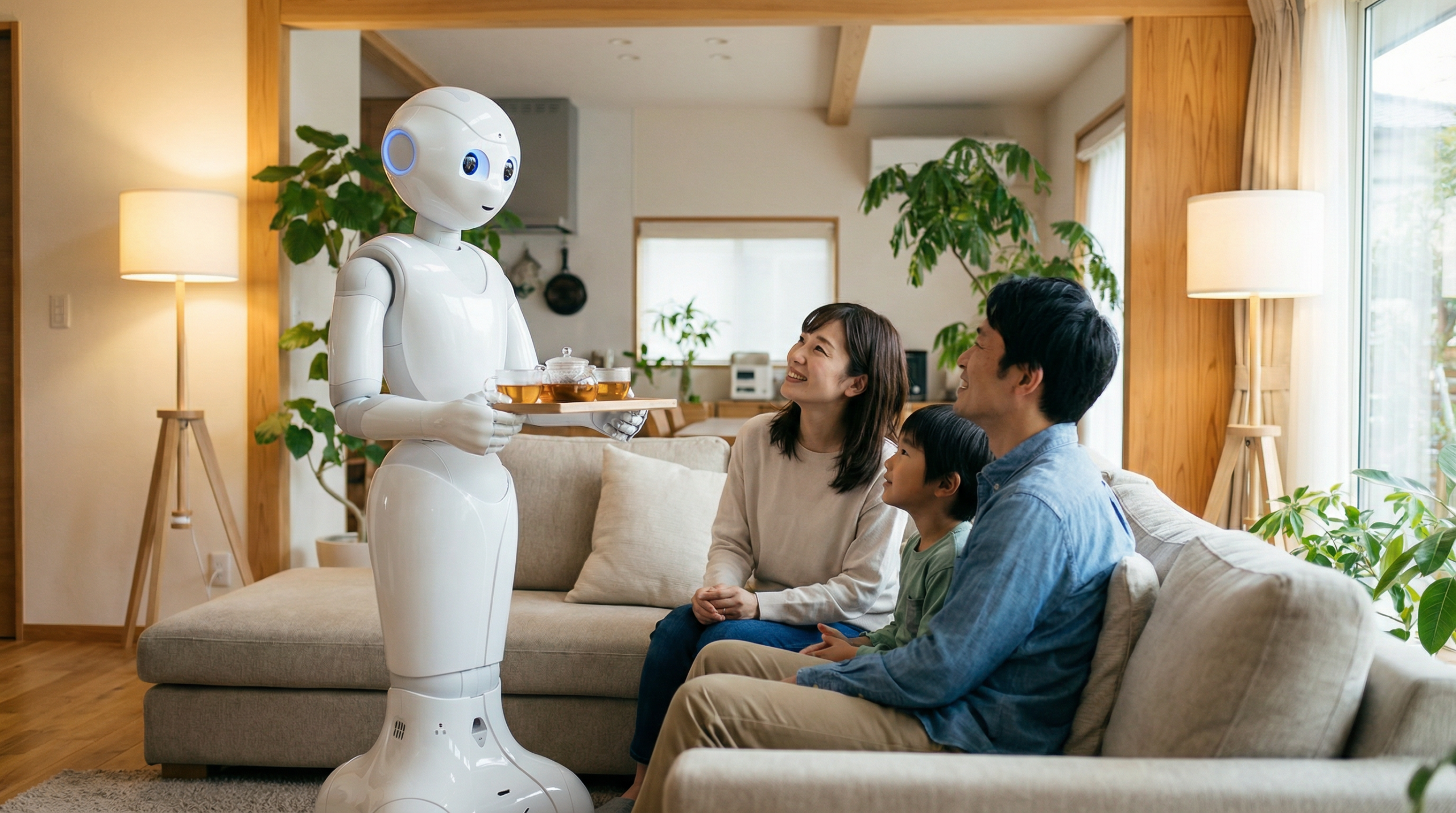
The humanoid home robot is no longer science fiction — 1X’s Neo is shipping at $20,000, and more than 50 companies worldwide are developing similar machines. But the real question isn’t whether we can build humanoid home robots. It’s whether anyone actually wants a 168-centimeter android folding their laundry.
The State of Humanoid Home Robots in 2026
Norwegian-US company 1X launched Neo as “the world’s first consumer-ready humanoid robot designed to transform life at home.” Standing 168 cm tall, weighing 30 kg, and priced at $20,000, Neo promises to handle household chores like folding laundry and loading the dishwasher.
Here’s the catch that Robohub’s analysis highlights: for tricky tasks, Neo requires a 1X employee wearing a VR helmet to remotely take over the robot. That operator can see everything the robot sees inside your house, and the sessions are recorded for training data. So your $20,000 “autonomous” home robot is partially a remote-controlled puppet — operated by someone who can see your living room.
Neo isn’t alone. Multiple companies are expected to bring household humanoids to market this year, and investment in the sector is surging. More than 50 companies globally are developing humanoid robots, driven by improvements in batteries, motors, and sensors from the EV industry, combined with rapidly advancing AI control systems.
Why It Matters: The Form Factor Debate
The fundamental tension in home robotics comes down to this: do you need a human-shaped robot, or just a robot that does the job?
Robot vacuums are a $5+ billion market precisely because they don’t try to be human. They’re purpose-built, affordable, and good at one thing. Dedicated laundry-folding machines exist and work more reliably than any humanoid attempting the same task with general-purpose hands.
The case for humanoid form factor is that homes are designed for human bodies — doorways, stairs, countertops, cabinets are all built to human dimensions. A humanoid robot can theoretically navigate any space a person can. But “theoretically” is doing a lot of heavy lifting. These robots remain clumsy in uncontrolled environments, and the gap between polished demo videos and daily usefulness is massive.
Then there’s the privacy problem. To improve, these robots need enormous amounts of real-world data — collected inside your home. That data includes intimate details about your daily life, your family’s routines, the layout of your house. And behind the AI, at least for now, are human teleoperators — real people watching through the robot’s cameras, often working long hours in developing countries.
According to the International Federation of Robotics, truly useful and widely accepted home humanoids may still be 20 years away.
The Consumer Readiness Gap
The tech industry sees humanoid robots as a trillion-dollar opportunity. Consumers see a $20,000 machine that might fold a towel — when it isn’t being remote-controlled by a stranger with a VR headset.
The honest assessment: we’re in the “smartphone in 1995” phase of home humanoids. The technology is real, the trajectory is clear, but the product-market fit isn’t there yet. Early adopters will buy Neo the way early adopters bought the first Roomba — as a novelty that hints at the future. But the mass market needs humanoid robots that are:
- Actually autonomous — no human teleoperators required
- Affordable — $20,000 is luxury-car money for a robot that folds laundry
- Reliable — working consistently in messy, unpredictable real homes
- Private — not streaming your home interior to training data servers
The Bottom Line
1X’s Neo proves humanoid home robots are technically possible. It doesn’t prove consumers want them — at least not yet, not at this price, and not with a remote human operator watching through the robot’s eyes. The real home robot revolution will likely come from task-specific machines that do one thing brilliantly, not from humanoids that do many things awkwardly. But give it a decade. The humanoid form factor’s day will come — just not in 2026.
