


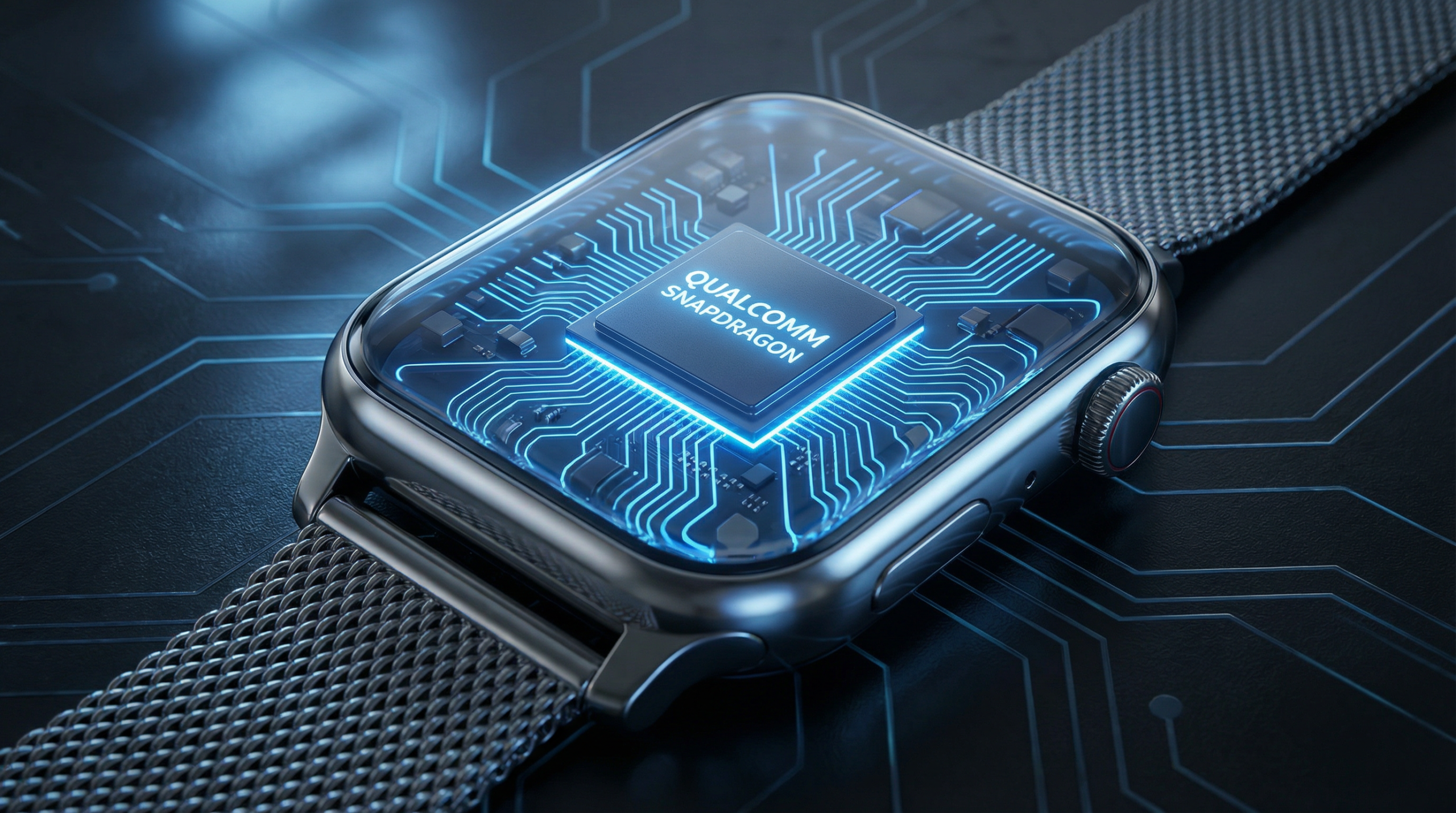
Qualcomm just dropped its most ambitious wearable chip yet — and it’s not just an incremental upgrade. The Snapdragon Wear Elite, unveiled at MWC 2026, is the first wearable processor with a dedicated AI engine, and it’s set to power the next generation of smartwatches, AI pins, and pendants from Samsung, Google, and Motorola. If you’ve been waiting for your smartwatch to actually feel smart, this is the chip that might deliver.
Snapdragon Wear Elite: Full Specs Breakdown
The Snapdragon Wear Elite is built on a 3nm process node, which is a significant leap from the 4nm architecture used in the previous Snapdragon W5+ Gen 2. Here’s what that translates to in real numbers:
- CPU: Five cores — one prime core clocked at 2.1GHz plus four efficiency cores at 1.95GHz
- GPU: Adreno A622, capable of pushing 1080p at 60fps — a first for any wearable chip
- Single-core CPU performance: Up to 5x faster than the W5+ Gen 2
- GPU performance: Up to 7x faster than its predecessor
- NPU: Dedicated Hexagon NPU supporting AI models with up to 2 billion parameters
- Battery life: Up to 30% improvement over previous generation
- Fast charging: Up to 50% charge in just 10 minutes
The connectivity suite is equally impressive. The chip supports 5G reduced capability (RedCap), micro-power Wi-Fi, NB-NTN for satellite connectivity, Bluetooth 6.0, GNSS, and UWB. Manufacturers can pick and choose which wireless features they need, so don’t expect every watch to have all of them — but the option is there.
Why On-Device AI Changes Everything
The headline feature here is the dedicated Hexagon NPU. This is the first time Qualcomm has put a full neural processing unit into a wearable chip, and it opens doors that previous generations simply couldn’t.
We’re talking about AI that runs locally on your wrist, not bouncing requests to a cloud server. That means faster responses, better privacy, and functionality that works even without a phone connection. Qualcomm envisions use cases like:
- Context-aware recommendations based on your activity, location, and habits
- Natural voice interactions with low-power keyword recognition
- Life logging — continuous background processing of health and activity data
- AI agents that can orchestrate tasks across your devices
- Advanced noise cancellation for calls and audio
Supporting 2 billion parameter models on a watch chip is genuinely impressive. For context, that’s enough to run sophisticated language models locally — something that would have been science fiction for wearables just two years ago. This puts smart home automation control directly on your wrist with real intelligence behind it.
The Competition: Apple Still Dominates, But…
Let’s be honest about the market reality. Apple Watch commands over 50% of the global smartwatch market, and Apple designs its own silicon. The S-series chips in Apple Watch have been consistently good, and the tight hardware-software integration gives Apple a natural advantage.
But here’s where the Snapdragon Wear Elite could change the game. Previous Wear OS watches have always felt like they were fighting their hardware — sluggish interfaces, mediocre battery life, limited AI features. The 5x CPU performance jump and dedicated NPU could finally give Android-based wearables the horsepower to compete on user experience, not just specs.
Samsung’s Galaxy Watch series, which already uses Qualcomm chips, stands to benefit the most. Google’s Pixel Watch line could also see a significant upgrade. And with Motorola in the partner list, we might see the return of competitive Moto smartwatches.
The satellite connectivity via NB-NTN is another differentiator. While Apple introduced satellite SOS with the iPhone 14, putting satellite capability directly into a wristwatch — one that could potentially function independently — is a meaningful step toward truly phone-free wearable experiences.
Availability and Pricing
Qualcomm says the first devices powered by the Snapdragon Wear Elite will ship in the “next few months” from the MWC 2026 announcement. The confirmed launch partners are Google, Samsung, and Motorola, though more OEMs are expected to join.
Qualcomm hasn’t disclosed chip-level pricing (they never do — it’s sold to manufacturers, not consumers). But given the 3nm process and expanded feature set, expect flagship-tier pricing on the watches that use it. We’re likely looking at $350-$500+ devices, similar to current Galaxy Watch Ultra and Pixel Watch pricing tiers.
For the latest on wearable technology, see our coverage of humanoid robots entering consumer homes and how voice assistants handle your data.
The Bottom Line
The Snapdragon Wear Elite is the biggest upgrade to Qualcomm’s wearable platform in three years, and it arrives at exactly the right moment. The wearable market is shifting from simple fitness trackers to genuine AI companions, and this chip provides the foundation that Wear OS manufacturers have been lacking.
The 5x CPU boost and 7x GPU improvement are impressive on paper. The dedicated NPU supporting 2B parameter models is genuinely novel. And the connectivity options — 5G, satellite, UWB — suggest Qualcomm is building for a future where your watch doesn’t need your phone at all.
Whether this translates into watches that can actually dent Apple’s market dominance depends entirely on what Samsung, Google, and Motorola build with it. The silicon is ready. Now the ball is in the OEMs’ court.
Source: Qualcomm Official Press Release
